
black is black und black is me
black schauten my black epoque
on black knees i called
black wail und black heaven
black spirituals for my black crusade
black, treat me right
black im wedding, im togo, im köln
black foreigners in the room und in the city
black im potsdam, im afrika
black everywhere
black augen und black hair
black festival und black tag
nyere und mahalia,
black liberation, illustrated by black gott
The found poem above is an expression of Black visual languages1, created by reading and rewriting textual artefacts from a set of objects (see Figure 1). Black visual languages communicate Black life through aesthetics, symbols, and images (still and moving); reading visual languages is a way of situating them in a particular context, engaging with what can be seen, how items were produced or designed, by who, for which reasons and audiences, and the relationship between visualities and the meanings of Blackness on different scales. I understand ‘Blackness’ and ‘Black’ as signaling the connections between Africa and the global African diaspora. Though Black names a racial categorization emerging from the rupture of colonialism and slavery, it is also a shared identity and referent to knowledges and lifeways that are outside these violences. This practice of reading Blackness weaves together visual, material, and experiential perspectives.
In this essay I explore a methodological approach to studying Black visual languages that allows for new expressions of Black diaspora life to be read and written. The process starts with a collective conversation which then facilitates further forms of engagement, converting an assortment of materials into an articulation of Black experience. I will begin by contextualizing the methodology, then demonstrate how it can be used to read Black visual languages by analyzing a set of items collected during a 2024 workshop discussing “Black multiplicities, African multiplicities? Theorising Migration, Identity, and Blackness from European perspectives”. The workshop took place at the Max Planck Institute for the Study of Ethnic and Religious Diversity, 18-20 November, 2024 (Workshop CFP). This theme weaves together Blackness in Europe, the complexities of colonial violence, the wake (after Christina Sharpe, 2016) of the transatlantic slave trade, and Afrofuturistic otherwises. Through each methodological step new modes of interpretation and insights are gathered which help us understand and engage with Black multiplicities.
Methodological process
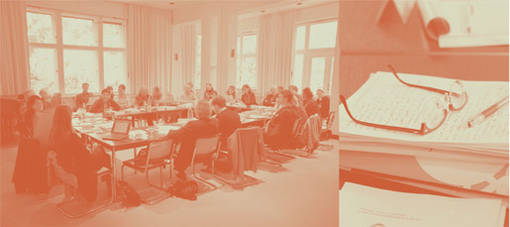
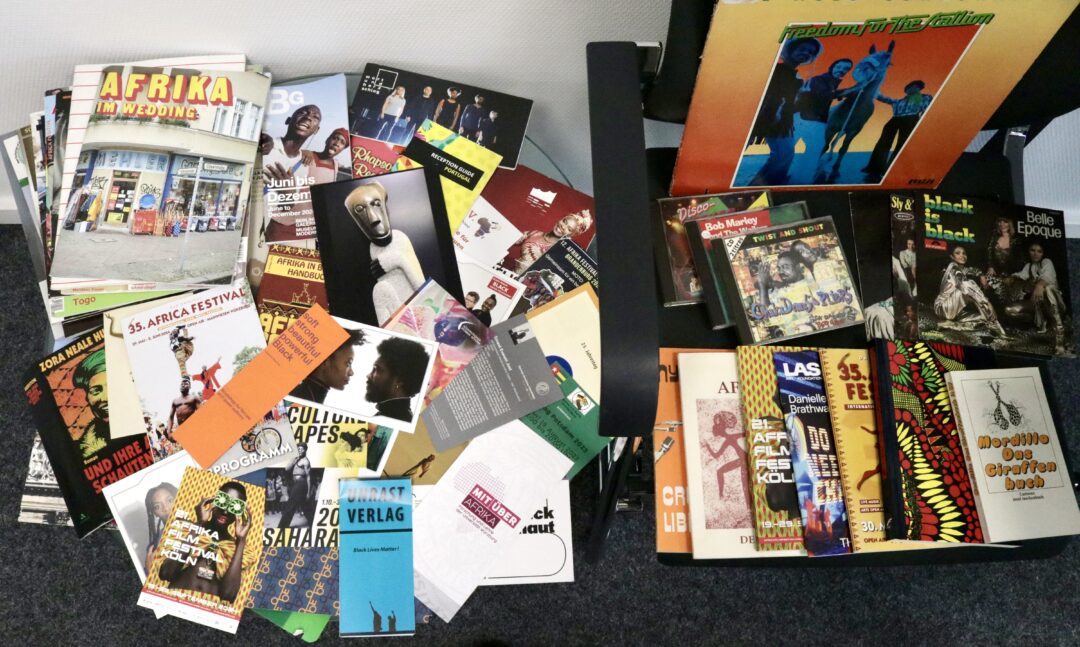
During the workshop, participants were presented with a display of materials (Figure 2) and invited to choose an item, then join in a group discussion about the item’s personal significance and relation to Blackness and African multiplicities. The selection made available to the participants was curated from my personal archives, complemented by items from my workshop co-organizer Dr. Johanna Lukate. The criterion for selection was a practical relation to Black Europe, broadly defined, including documents from events, organizations or community groups, cultural artefacts, publications both by and about Black people; anything that had Black and European roots or routes, connecting the diaspora to the continent by way of production or purchase. In curating I aimed to present a diverse expression of Blackness and Black visual languages from the collection of “Black miscellanea” (McKittrick 2021). Items had varying (visual) relationships to Black European life. Some offered explicit linguistic or geographic references (German language, place names), others only identifiable as Black and European through closer reading or insider knowledges. Backgrounding these items and participants’ subsequent engagement with them was the larger workshop theme and the question of Black multiplicities. In the end, approximately 75 items were displayed in the final collection (partially depicted in Figure 2).
The ensuing activity is an altered version of a process developed by Gebriwot Berihun, Martha Kuwee Kumsa, Abdullahi Hussein, Jemila Jackson, Amilah Baksh, Jenany Crutchley, Shani Ellis, and Yunfei Ma, who piloted the use of objects as a data generation tool during their participatory project on violence and healing among diverse youth in Canada (2014). Berihun et al.’s participants brought items that had a clear visual symbolism, such as artwork or a sign, as well as everyday objects such as a plant, which may not be read as immediately related to their themes (violence or healing). In both our workshop and the original methodology designed by Berihun et al., an object was read on multiple levels: what it looks like or is meant to do (as with a flyer or a sign), what it means to individuals and communities, and how it portrays the lived realities of complex concepts like Blackness.
The process of selection and group conversation uncovers the symbolic meanings of items, the relations of power they exist within, and how they relate to individual and collective knowledges and identities.
Once the participants made their choices these objects formed a new set, a capsule collection of Black multiplicities expressed in assorted visual forms. This collection is an illustration of Black diaspora life, and a tool for further reading and understanding Black visual languages.
I will briefly describe and model some potential strategies for analyzing or reading these languages.
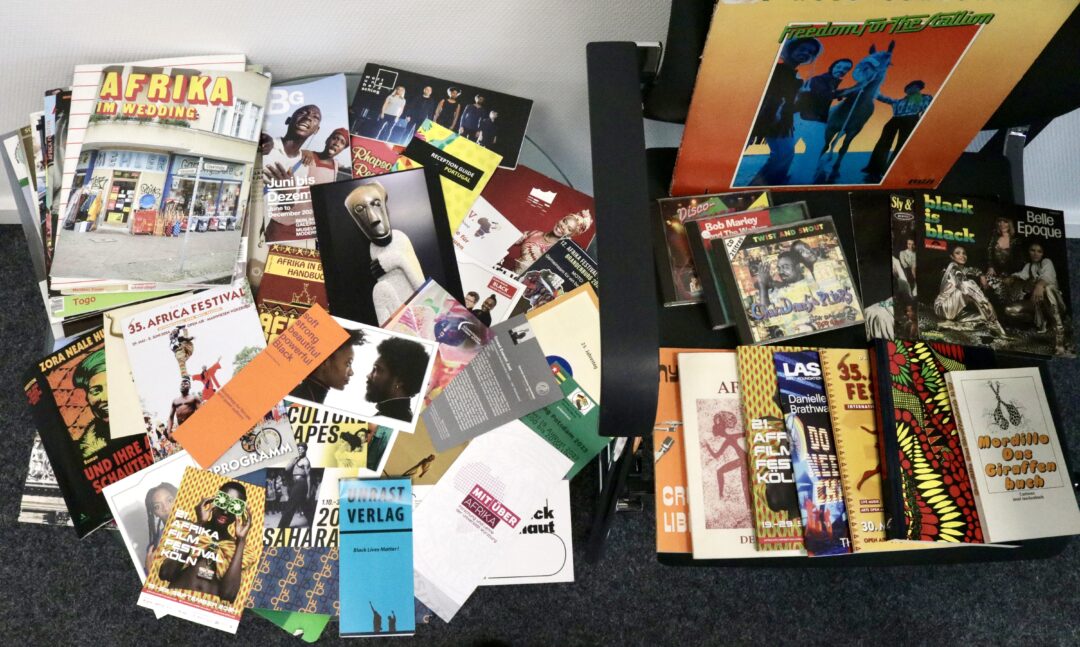
Figure 1: Items selected by workshop participants. Photo by author.
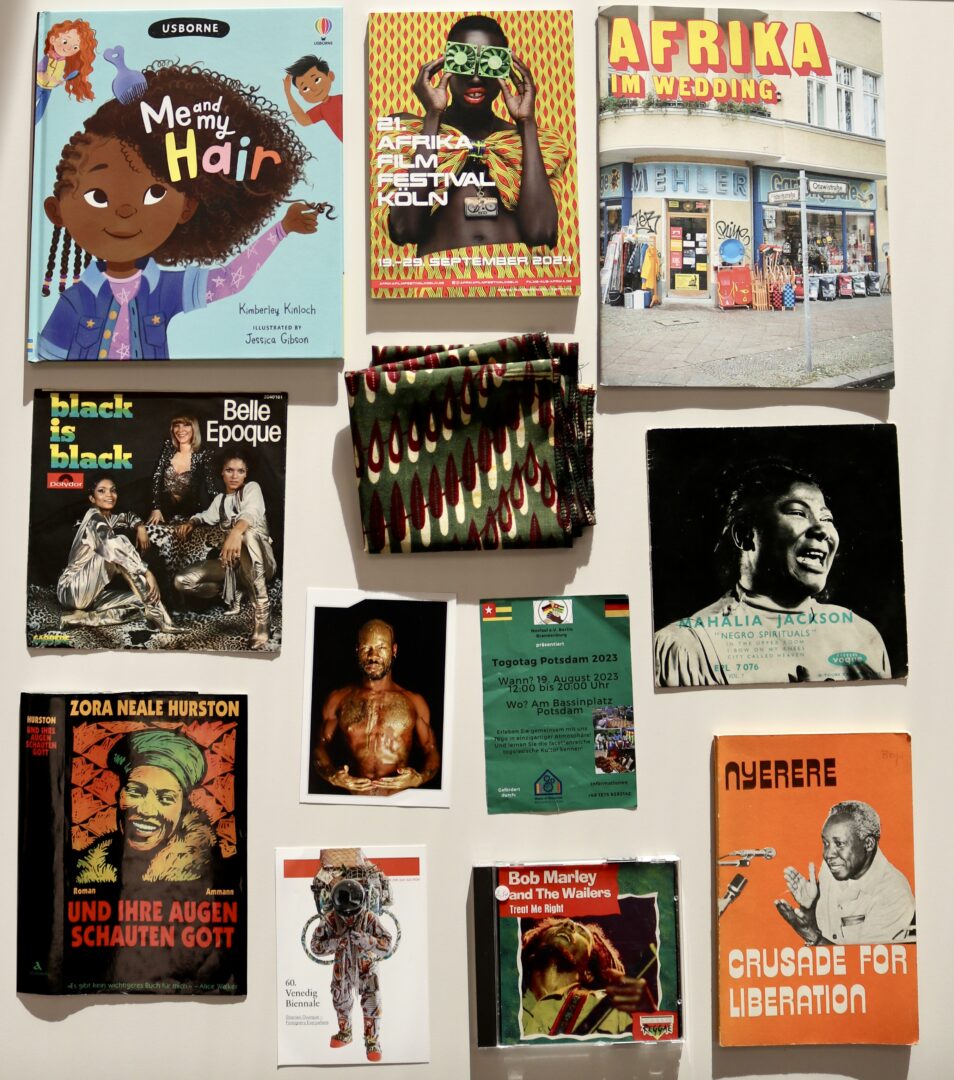
Figure 2: The display of CDs, records, books, magazines, and pamphlet. Photo by author.
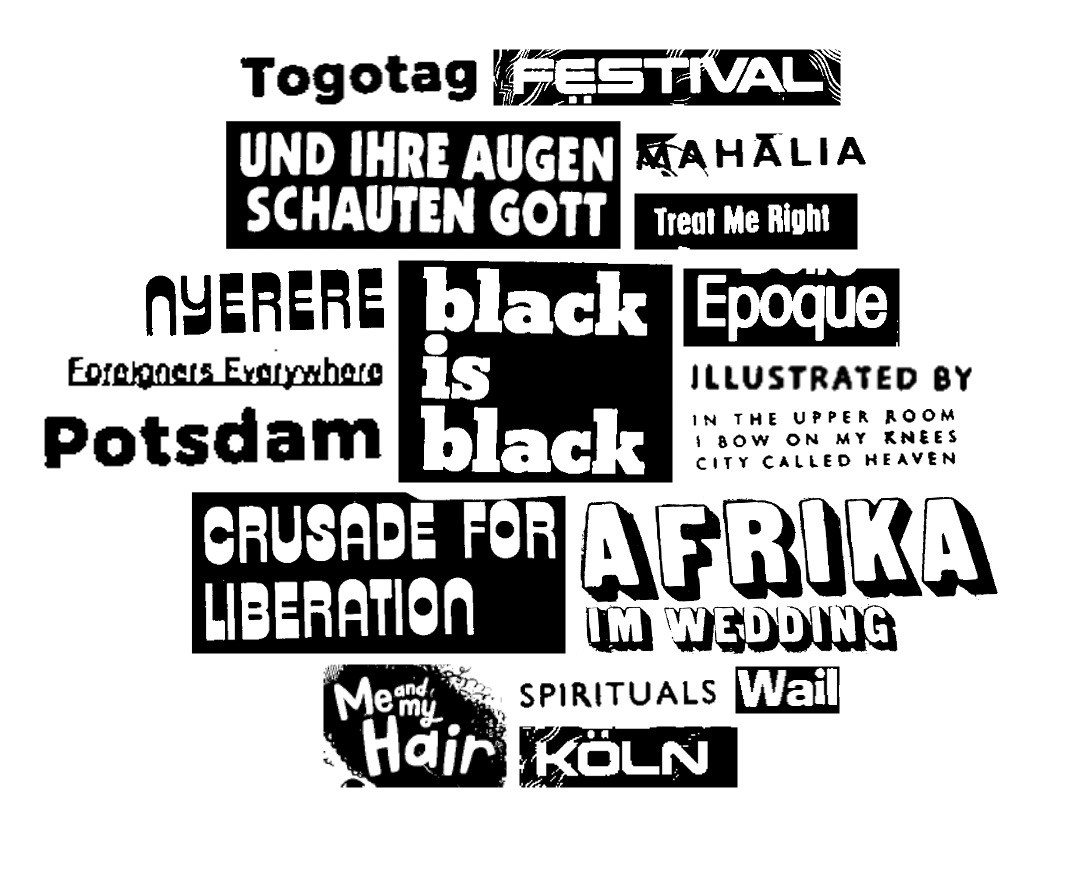
Figure 3: Text fragments from the collection of selected items. Photo by author.
Reading the objects
Found poetry
The found poem which opened this essay was made by treating the textual fragments (Figure 3) from the materials as an additional dataset, related to the accompanying imagery but not confined to it. Creating a found poem is an Afrofuturistic way of thinking about the multiplicities of Black identity through the words that narrate lived experiences, locating poetics of Blackness in the margins and miscellanea (McKittrick 2021). I view the poetic practice and the poem itself as Afrofuturistic due to their shared commitment to envisioning worlds and ways of relating outside of the (im)possibilities of the antiblack world order. Using found poetry, words were transformed from their functional role, as catalogues of Black life now, into a speculative vision of Black life elsewhere. This refiguration is in some ways similar to Rambisayi Marufu, Melody Howse, and Nasheeka Nedsreal’s discussion of collage as Black visual practice (Allegra Lab 2025). The process of selecting the textual fragments resonates with Tina Campt’s extensive work on Black visuality, including her practice of “listening” to images (2017), and her attention to the affective function of images (2012). In this example, the found poem articulates what I “heard” from the images as well as my emotive interactions with the visual.
The transfiguring of the phrase “black is black,” from a descriptive text on an album cover to the poem’s opening line, demonstrates the role of listening to and feeling images in the poetic practice. The image features three people posed against a black background; in the bottom of the frame two Black women lean onto a small ottoman, while a white woman perches on top, her smiling face situated in between the album and band titles. The difference in positioning and strategic placement of the key text implies a difference in status, one compounded by the racial difference. Driven by an emotive response, I tried to resolve the discomfort through further research. Instead I found that both the visual depiction of Black people and deployment of the term black reflect processes of marginalization.2 However, by listening to the image from another perspective, and through the poetic process, I (re)claimed the phrase to narrate Black life differently.
I started with the way the text connects to my lived experience, following my first introduction to the phrase in a 1988 song by Black American hip-hop group the Jungle Brothers3 (no relation to the above renditions outside of the shared name). If I hear this version of the song as I “listen” to the image, I read the phrase “Black is Black” as an affirmation for Black communities struggling against marginalization, an experience that the imagery illustrates.
Coupling this rereading with a rewriting of the text as part of the poem moves it from evidence of Black othering into a revisioning of Black life. In the final poem words were kept in their original language and form. Thus I understood “black” as an expression of Black identity, but left in its original lower case. Words in French and German were translated as follows: und = and (orig. German), schauten = watching (orig. German), epoque = epoch (orig. French), im = in (the) (orig. German), augen = eyes (orig. German), tag = day (orig. German), gott = god (orig. German).
This approach to images can also be considered a practice of refusal, as I am refusing to let the textual be defined by an expression of white domination. Through a poetic imaginary, the text helps instead to create a conversation about Black life with an Afrofuturistic vision; Black liberation and a Black gott. Each of the textual fragments found in the poem have their own genealogies, and the poem itself is a way of condensing and expressing my listening process. In this reading practice, Black visual languages are interpreted by taking the materiality and moving it into a more imaginative space.
Visual analysis
Another mode of interpretation begins by analyzing the most visible elements of the collection such as the representations of people (comparing Mahalia Jackson’s sorrow with Julius Nyere’s confidence), geographies (Berlin, Köln, Potsdam; 3 German cities with starkly different political climates), race and gender (how the three women in Belle Epoque speak of Blackness), or symbols and aesthetics (from the meanings of wax print fabrics to the resulting color palate of the collection as a whole and its rich red, gold, green, and orange). By situating each of these elements in relation to the idea of ‘Black multiplicities,’ and adding depictions of the visual languages of Blackness to other forms of investigation, the meanings of the concept are more fully fleshed out. The initial group session created a snapshot of Black European life that can facilitate and focus further study.
Autoethnography
The collection can also be interpreted using autoethnographic analysis, moving from visuality into the experiential (lived and felt). In this reading, before the visual elements are interpreted, the items are grounded in place and made personal. The Afrika im Wedding magazine was borrowed from the Oromo Horn von Afrika Zentrum e.V. (OHAZ), located in the Wedding area of Berlin, where I have been working since 2019. OHAZ has a library and extensive archive of Oromo diaspora organizing and liberation movements from the 1960s to today. The magazine also documents OHAZ’s relationships outside of the Oromo community, including a feature story about Black activists working in the neighborhood. The Zora Neale Hurston book is similarly embedded in Black community organizing; it was given away by a community member when I attended Generation ADEFRA’s monthly Stammtisch. These regular meetings are a hallmark of the group, one of Germany’s oldest Black or Afrodeutsch organizations. The book connects my Black American home to my German life, and the process of acquisition illuminates how Black community organizations (re)produce Black knowledge.
Through autoethnography, each item could be enriched with these stories, making a map of these personal and diasporic connections. Linking the emotional tone of my lived experiences back to the visual expressions finds resonating themes: the brightly colored script in Afrika im Wedding’s cover reflects the vibrancy of African diaspora culture in the neighborhood, and Zora Neale Hurston’s smile is a familiar and familial face, like those of the Black community members in Germany who have welcomed me into their homes. This reading practice approaches visual languages as complementary and in conjunction with the experiential, personal perspective.
Collective readings
Forms of autoethnographic and visual analyses can be further extended through collective analytical practice. The conversations and stories from the workshop discussion are not mine to tell (here, alone). However, during the initial conversation each participant shared the justification behind their selection, reasons which were not exclusively connected to the aesthetic character of the item. These narratives can be studied as a form collective autoethnography, and as with the individual example shared above, they can serve as a foundation to interpret the thematics of the visual languages. Collectively reading the collection for its visual elements is another potential approach, one which interprets these visual languages through the different geographies and knowledges of the collective, and their understandings of Black Europe. Through such a shared inquiry process, visual languages get further nuance and range of expression.
Conclusion
The methodological process modeled here facilitates an understanding of Blackness and reading of Black visual languages beyond static analysis. It shows how a single item can connect across the Black diaspora, shifting in meaning as it comes into conversation with new perspectives. Beyond data collection, the methodology also makes knowledge production in the academy a more intimate and personal experience, where lived experiences are valued equally with formal theories and data. The expertise that comes with being Black and being in community with Black people allows for readings of Black visual languages which cannot be captured in text or elucidated easily in an interview.
By using these varying modes of analysis (personal and autoethnographic, spatial, visual, and collective) the dataset both answers and asks further questions, digging deeper into Blackness and the possibilities of Black anthropology. The data that can be gleaned from these 12 objects demonstrates the richness of the methodology as a way of engaging in Anthropological study of Blackness through modes such as visual analysis, Black anthropology, and auto-ethnography.
Featured Image: Workshop photograph by author.
Notes
- I’m grateful to Melody Howse here, who brought the notion of Black visual languages and Black visualities forward during personal conversations, as well as in her ongoing research work. ↩︎
- The song is a cover by (white) Spanish rock band Los Bravos’ 1966 story of a lover who has gone away, its chorus repeating “black is black, I want my baby back.” The women of Belle Epoque in the image were not all permanent members of the band. Though the lead singer stayed the same, further albums (and their cover images) featured different constellations of Black women, always positioned as accessories to the (white) star. ↩︎
- The song features verses by hip-hop artists Q-Tip of A Tribe Called Quest and Afrika Baby Bam, a combination that was a precursor to the Afrocentric collective the Native Tongues, and is driven by a sample from Gil Scott Heron’s 1974 track, “The Bottle,” which critiques alcoholism in Black communities. ↩︎
References
Berihun, Kumsa, Hussein, Jackson, Baksh, Crutchley, Ellis, and Ma. 2014. “Reflections on using physical objects as data generation strategies: An example from a study of youth violence and healing.” Qualitative Social Work 14(3): 338-355.
Campt, Tina. 2012. Image Matters: Archive, Photography, and the African Diaspora in Europe. Duke University Press.
Campt, Tina. 2017. Listening to Images. Duke University Press.
McKittrick, Katherine. 2021. “Dear April: The Aesthetics of Black Miscellanea.” Antipode: The 2021 Antipode AAG Lecture.
Sharpe, Christina. 2016. In the Wake; On Blackness and Being. Duke University Press.
Abstract: How do we read, write, and understand Black visual languages? Drawing data from an academic workshop on “Black multiplicities, African multiplicities? Theorising Migration, Identity, and Blackness from European perspectives,” this paper explores a methodological approach to the study of Black visualities, one that connects academic knowledge production to lived experiences beyond the academy. Through reading physical objects as expressions of Black diaspora life, the essay models an approach to research and way of collective study.