We are living through an increasingly terrifying global emergency. For many of our research participants, and for some of our own families and communities, this emergency has long been the norm. What has changed is that it has now reached even those privileged spaces in which anthropology and other academic disciplines have historically resided.
Across universities and learned societies, discussions once treated as peripheral have become unavoidable. Anthropologists increasingly ask how we can respond to genocide in Gaza, to wars and economic warfare affecting our fieldsites and communities, and to the erosion of democratic and social institutions across the world. At the same time, many junior colleagues confront worsening precarity, shrinking employment prospects, and growing constraints on what can be researched, taught, and publicly discussed.
These questions are experienced with very different levels of urgency. Among parts of the disciplinary old guard, change comes at a glacial pace. Among precarious scholars, however, academic freedom is no longer an abstract principle. It is experienced as an immediate existential concern, inseparable from the material conditions of academic work.
The issue is not simply whether academics may speak. It is whether the material conditions exist for independent intellectual work to occur at all.
My own perspective comes from two decades of research on academic labour and involvement in academic labour union and an anti-precarity pressure group. This included serving in 2019-2023 on the Executive of the European Association of Social Anthropologists (EASA), as a member of PrecAnthro, a platform of precarious anthropologists. My experience reveals that at a time when universities are increasingly subject to capitalist capture, learned societies offer a fresh, if limited, space for collective action.
Universities under Capitalist Capture
Much public discussion of academic freedom focuses on threats posed by authoritarian governments. Such threats are real and require continued attention. As have other academic associations, EASA has mobilised in support of Turkish Academics for Peace, anthropologists imprisoned in Iran and Egypt, and colleagues facing attacks on universities and social science institutions in countries including Hungary, Poland, and Brazil.
Yet, my own research-informed position is that academic unfreedom is not produced only by authoritarian states. It is also generated within allegedly democratic systems that increasingly organise public institutions and universities according to market principles. Academic freedom can be constrained not only through censorship, but through funding structures, employment arrangements, and organisational forms that shape what kinds of knowledge are supported or possible at all.
In research, competitive funding systems increasingly reward those eligible and able to secure external grants while concentrating credit and resources in the hands of a shrinking group of permanent academics. Principal investigators become project managers, while much actual research and teaching work is performed by colleagues employed on short, fractional and fixed-term contracts. The result is an academic workforce in which intellectual and emotional labour are often extracted from those with the least security and the fewest opportunities to shape their futures.
This dynamic becomes ever more evident in teaching. Across Europe and beyond, universities depend increasingly on precarious teaching labour. Courses are delivered by colleagues on temporary contracts, through outsourced providers, or via expanding EdTech platforms. Meanwhile, even permanent staff face escalating workloads and growing redundancy threats. Fear of unemployment increasingly shapes academic life. Such conditions do not simply affect wellbeing; they affect what people feel able to teach and research and thus profoundly shape academic freedom/s.
Finally, these pressures are equally visible in academic service and public engagement. Universities increasingly encourage academics to demonstrate impact, innovation, commercialisation, and industry collaboration. While this transformation comes from a valid critique of armchair academia, it has now become the worst nightmare of many of its critics. Research proposals must often define outcomes before inquiry has begun and demonstrate relevance to policy or commercial stakeholders irrespective of whether those stakeholders align with the interests of the communities being studied. As a consequence, publicly funded research increasingly serves corporate interests and military agendas.
This broader context, which my own research has focused on, is vital to the discussion of academic freedom today. The issue is not simply whether academics may speak. It is whether the material conditions exist for independent intellectual work to occur at all.
A New Role for Professional Associations?
Professional associations cannot solve these structural problems alone. Yet they can use their resources to research and reframe them, and sanction forms of exploitation and extraction within their membership. Under the pressure of, and with the hard work of members of PrecAnthro, subsequent EASA executives have worked on initiatives that engage with these issues at earnest. In anthropology, after years of organising by precarious scholars, these issues have moved from the margins to the centre of disciplinary debate.
As an example, the Collaborative Authorship Guidelines endorsed by EASA, challenge exploitative and extractive publication practice and give tools to scholars without access to major grants or secure institutional support to negotiate their working conditions. The Anthropological Career in Europe report demonstrates how employment insecurity has become a structural feature of academic life and that many anthropologists are exposed to the contingencies of precarious employment and project culture. While not in the position to create more jobs, these initiatives cut to the core of the question how academic labour, authorship, funding, and recognition are organised within contemporary universities.
For learned societies, silence is therefore not a neutral position.
Thus, in an era when universities increasingly work under capitalist capture, professional associations such as EASA have become spaces where precarious scholars can organise, where questions of labour and inequality can be addressed collectively, and where threats to academic freedom can be addressed in their complexity: not as mere protection from state censorship, but as inseparable from employment security, working conditions, equitable authorship, open and free access to publication, and the ability to conduct research without serving commercial or military objectives.
Where Next…
In recent years, the genocide in Gaza has exposed these contradictions with further force. Across many countries, scholars and students have encountered pressure, surveillance, disciplinary procedures, funding threats, and reputational attacks for expressing solidarity, criticising state violence, or calling attention to humanitarian catastrophe. Similar dynamics affect those working on other conflicts, occupations, borders, and forms of structural violence around the world.
For learned societies, silence is therefore not a neutral position. Academic freedom is not only the freedom of individual scholars to express opinions. It is also the collective capacity of academic communities to defend colleagues under attack, protect intellectual dissent, and recognise when forms of political and economic power threaten the conditions under which knowledge is produced.
The challenge facing learned societies today is therefore profound. The question is: are they merely debating societies or can they also be vehicles through which academics collectively defend the conditions necessary for intellectual life? In an era marked by genocide, war, displacement, authoritarian resurgence, and deepening precarity, that question can no longer be postponed.
The future of academic freedom depends on how we answer it.
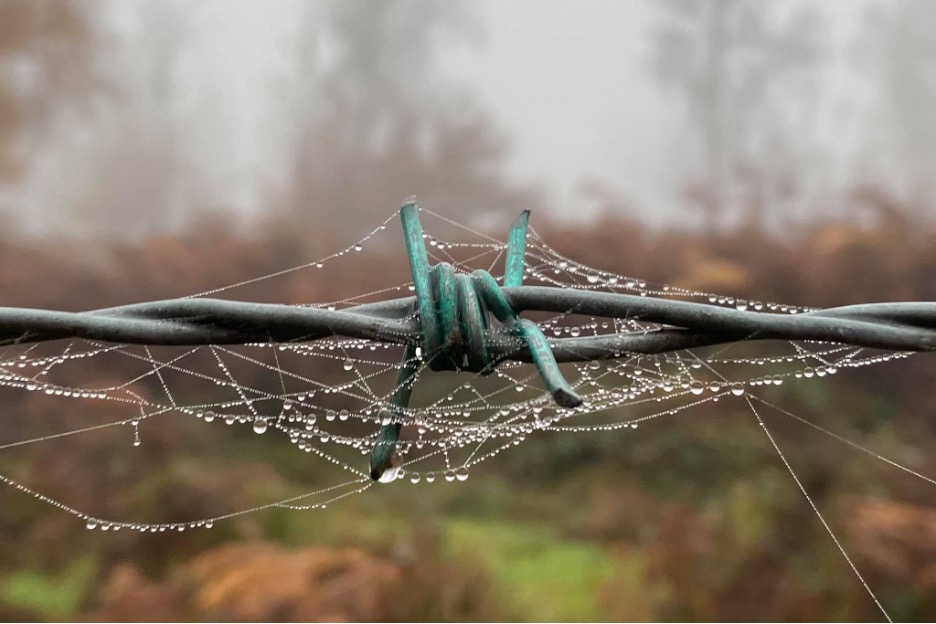
Featured image: Wounding Structures, Fragile Hope (photo credit: Chris Bailey)