

Cultural harm was authorised, later priced, and paid for
Since 1976, Aboriginal Traditional Owners in the south-west Gulf of Carpentaria, northern Australia have used courts, advocacy and negotiations to defend their ancestral lands and waters (Country) and challenge decisions regarding the construction and operations of the McArthur River Mine. Their efforts have unfolded as a long, public struggle over who has the authority to speak for Country and decide its future, and a quiet revolution has occurred around what happens when state-sanctioned activities harm Indigenous territories.
For Gudanji, Yanyuwa and Yanyuwa-Marra families, cultural harm has been done. It is not tomorrow’s problem; it is here, now and requires accountability and repair.
The case demonstrates that cultural harm is not reducible to symbolic injury or site-based loss.
This point has been underscored by the findings of a Native Title compensation claim, arising from acts that enabled the McArthur River Mine. Justice Katrina Banks-Smith’s Federal Court judgment in this case is significant not only because of the size of the compensatory amount of $54 million for Aboriginal cultural loss and $743,408 + interest for economic loss, but because of what it says about the nature of loss. In Native Title law, harm goes beyond physical damage to include injury to kinship with Country, sacred sites, and inter-generational learning.
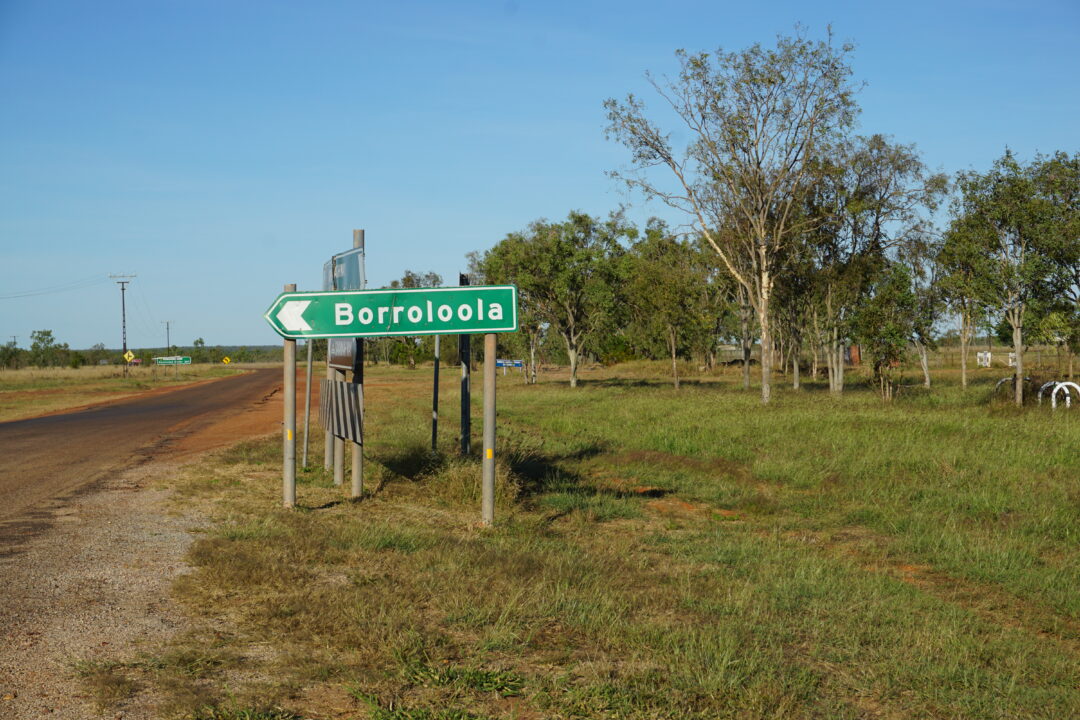
Road sign signalling the turn off to Borroloola, a remote township in northern Australia in which Gudanji, Yanyuwa and Yanyuwa-Marra families reside, by Amanda Kearney.
Anthropologically, the case demonstrates that cultural harm is not reducible to symbolic injury or site-based loss. It reveals the saturating effects of colonial intrusion and violence, by highlighting how the original dispossession of Indigenous people’s lands by colonial mandate and design leads to the conditions which ultimately support the land use practices and extractive logics which come to overlay and dominate in certain locales. What become permissible acts to lands and waters, with state approval, can be considered a catalyst for long-term hardship, economic impoverishment and cultural wounding for generations of Indigenous people (see Kearney 2014). Acts of extraction can bring profound harm to a relational world: to kinship with Country, to intergenerational learning, to ancestral presence, and to Indigenous authority itself. The ruling is therefore best read not only as a legal milestone, but as evidence of a deeper tension between Indigenous legal-moral orders and a developmental state that continues to authorise extraction through the displacement of Aboriginal jurisdiction.
Why this case matters
The McArthur River Mine dispute has a long history. Litigation has spanned decades, demonstrating how difficult it is for Aboriginal people to challenge resource projects once the government have committed to them.
As Native Title compensation law has developed, the McArthur River case builds on principles clarified by the High Court in Timber Creek (2019), Australia’s landmark compensation case. In Timber Creek, the Court confirmed that cultural loss cannot be reduced to market value, because Native Title reflects an enduring connection to Country, not merely an economic interest in land.
Extending this reasoning into the mining context, Justice Banks-Smith acknowledged harms in the Gudanji, Yanyuwa and Yanyuwa-Marra case as “intergenerational and enduring”. Such is the nature of irreversible disturbance of Dreaming sites, permanent environmental degradation, contamination and the loss of ability to move freely over the Country of one’s ancestors.
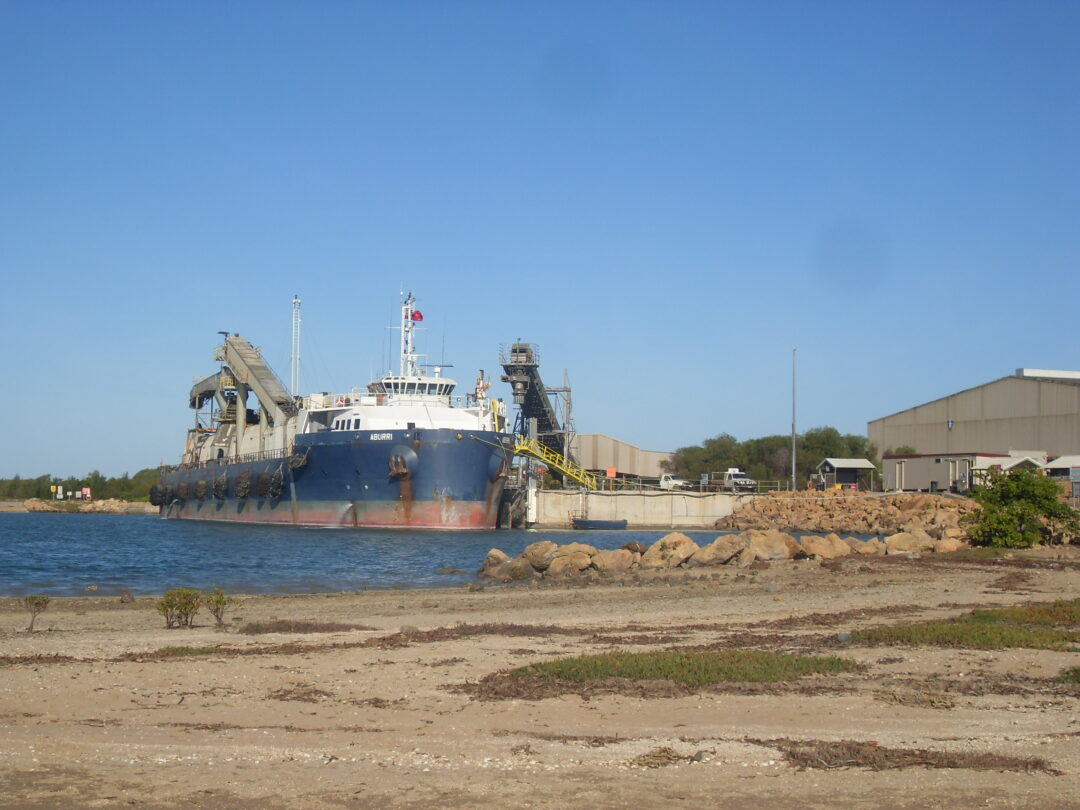
The Bing Bong Port Facility, in the southwest Gulf of Carpentaria, northern Australia, located on Yanyuwa traditional lands and waters, by Amanda Kearney
Quantifying this harm is difficult, yet the case has required monetary assessment. Claimants sought no less than $225 million; the award, while historic, fell significantly short. How the money will be distributed among across families and among members of the claimant group remains to be seen and is a point of ongoing discussion within these communities. Compensation however should not be perceived as justice won. The scale of the mines’ legacy is reflected in the judgment. Recent compliance reporting says the current life of the mine extends to 2038, while McArthur River planning documents assess the project over a 1000-year timeframe. The benefits of extraction were counted in decades, but the risks and burdens may persist through many generations of the people whose Country absorbs them.
Addressing faultlines in development assessments
The current approach for development assessments is ethically indefensible and economically reckless. To avoid protracted legal action and compensatory payments, development assessments need to change. Cultural harm must be assessed before approval. Cultural impact is interwoven with environmental impact. An Indigenous perspective, as shown in the Gudanji, Yanyuwa and Yanyuwa-Marra context makes this plain, and emphasises cumulative and intergenerational risks and potential harms to ancestral presence, sites of significance, responsibilities and access, language and learning on Country.
[The] ruling shows that extractive conflict is never only about land use or compensation, it is also about the struggle over whose world-making practices count in law and governance.
Consultation failures are governance failures, not communication failures. The Productivity Commission’s 2024 review found that governments are failing to fulfil their commitment to change how governments work with Aboriginal and Torres Strait Islander peoples, a cornerstone of Closing the Gap – Australia’s national policy framework for reducing inequality between Aboriginal and Torres Strait Islander people and other Australians.
Approval systems must align with Closing the Gap reforms and test two fundamentals: was consultation meaningful, with decision-making genuinely shared? And were Aboriginal community-controlled organisations properly resourced to lead and participate on equal terms? If not, harm is not a future risk; it has already begun. Native title compensation claim outcomes will continue to inform Closing the Gap reforms on the one hand by acting as a caution to the need for consultative and approval processes that genuinely recognise Indigenous cultural values, and on the other by providing independent capital and decision-making authority in relation to financial resources. In principle the latter could directly address Outcome 15 of Closing the Gap, which strives to ensure people maintain cultural, spiritual, physical and economic relationships with their land and waters.
The McArthur River Mine compensation ruling shows that extractive conflict is never only about land use or compensation, it is also about the struggle over whose world-making practices count in law and governance. The long arc of this dispute reveals something deeper, that goes beyond the cost of flawed approvals, namely the strength of Aboriginal governance and the enduring responsibility to care for Country. The communities who are seeking Native Title compensation are showing Australia that a safer future is possible, one where cultural harm is identified and avoided up front, where Traditional Owners lead assessments on equal terms, and decisions protect lands and waters so they can continue to sustain life and learning.
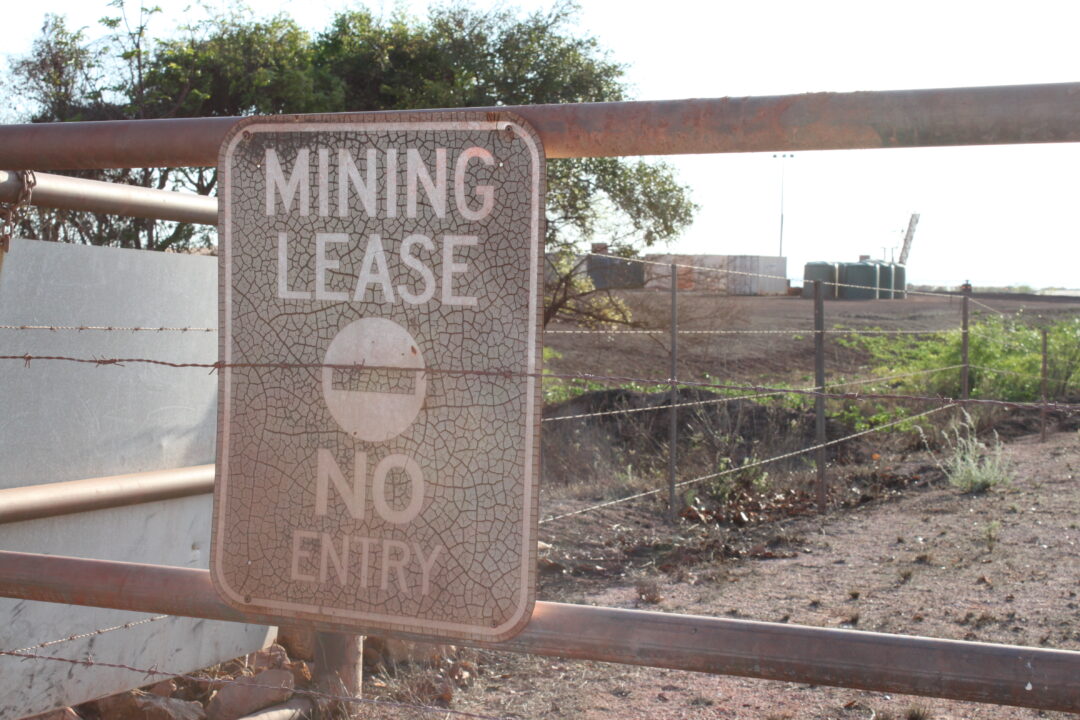
Featured image: ‘Mining Lease No Entry’ sign at the Bing Bong port facility, on land leased by the McArthur River Mine, northern Australia, and included in the Native Title compensation claim, by Amanda Kearney.
References
Kearney, A. 2014. Cultural Wounding, Healing and Emerging Ethnicities. Palgrave Macmillan: NY.
Abstract: This article examines the McArthur River Mine Native Title compensation ruling as a landmark case in the recognition of Aboriginal cultural harm in Australia. Since 1976, Gudanji, Yanyuwa and Yanyuwa-Marra Traditional Owners in the south-west Gulf of Carpentaria have, through various legal channels, challenged decisions authorising the construction and operation of the McArthur River Mine. In doing so they have asserted their authority to speak for Country and defend their ancestral lands and waters. Anthropologically, the case reveals how state-sanctioned extraction can generate enduring cultural, environmental and economic harm, while exposing the tension between Indigenous legal-moral orders and development regimes that continue to displace Aboriginal jurisdiction. The article argues that compensation should not be mistaken for justice achieved: the mine’s impacts are cumulative, intergenerational and potentially enduring across vastly longer timescales than the economic benefits of extraction. It further contends that cultural harm must be assessed before project approval, and that meaningful consultation, Aboriginal community-controlled decision-making and properly resourced Traditional Owner participation are governance requirements rather than procedural additions.