
The questions listed in the screenshot here (fig. 1) are at the heart of the seven essays in this thematic thread. Honest. Vulnerable. Curious. They show what fascinating queries an ethnographer might pursue with poetic resonance as their approach to research. The essays also highlight how fascinating journeys the research process can become when using an experimental work style in the practice of fieldwork, analysis, theorization, and writing. While the word ‘experimental’ can evoke images of experiments conducted under strict protocols in sterile laboratories by people in white lab coats, we use it here in the expanded sense developed in science and technology studies to refer to social processes rather than knowledge sites (Sansi, 2020). Meaning we are less concerned with ‘the experiment’ as a disciplinary mode of making sense of the world, and more with ‘experimentation’ as a transdisciplinary research approach designed to give unknown answers to questions that aren’t clear (Marcus, 2010, p. 275). It is an experimentation that adopts the ‘why not’ mindset of trial and error (Martínez, 2021, p.1) to explore what we can learn by engaging with the field in new and unexpected ways, thereby changing the limits of what is possible in the process. For example, by changing who we collaborate with (e.g., see Bell et al., 2022; Martínez, 2021), how we collaborate with them (e.g., see Irving, 2017; Kazubowski-Houston, 2010), or what kind of knowledges these collaborations produce (e.g., see Ellermann et al., 2025; van Roekel & Murphy, 2024; Stone, 2023).
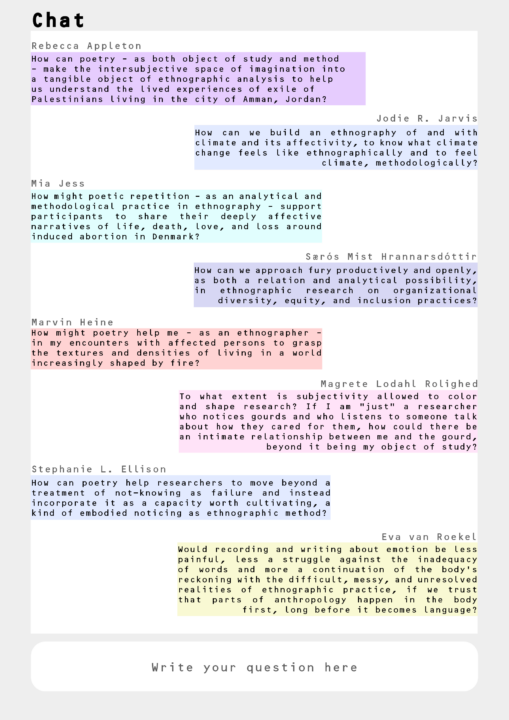
Fig. 1: Introducing questions and contributors
Because affective intensities are often vague, slippery, and ambiguous, an experimental ethnographic workstyle can help researchers make visible what words cannot describe or find other ways to share what is learned in practice on paper (Scholtes, 2023). We – Minke and Amalie, the editors of this collective thread – have spent the last couple of years working on and experimenting with poetic forms to engage with our fieldwork materials and write them up. Poetry drew us in for its capacity to address topics that have clear affective dimensions (Prendergast, 2009). Poetry has access to a specific set of tools – an “embodied laboratory” (Stone, 2020, p. 197) – that can amplify these dimensions to produce lived worlds on paper that vibrate with sensation: sights pop, sounds whir, smells tickle. Tools which ethnographers have long used to share insights with audiences, paying as close attention to the bodily effects of sound and repetition, image, metaphor, and sentence length on the reader in their texts as they do to their content (Kusserow, 2020; Stone, 2020). However, as we lost ourselves in lines and lines of vivid imagery, we couldn’t shake the feeling that more was possible with ethnographic poetry.
An experimental ethnographic workstyle can help researchers make visible what words cannot describe.
In this introduction, we briefly discuss the journey that led to the ethnographic practice we call ‘poetic resonance,’ culminating in a workshop we held on 19 and 20 May 2025 and this thematic thread. We end with a presentation of a protocol of prompts that was used and reworked during the workshop to probe the tenements of ‘poetic resonance’ through practice. We offer the protocol – and the poetic essays in this collection – as an invitation for you, our readers, to do your own poetic experiments.
Our Journey
Our experimentation with poetry was affected by a strong emotion. We were both fed up with trying to force our writing with affect to fit the demands of academic traditions at the expense of staying faithful to our interlocutors’ stories and experiences. Moreover, poetry helped us to recover some of its vibrancy and immediacy in our writing. We felt that many potentially important insights were nipped in the bud by standard analytical practices meant to bring order to the mess and complexity of lived experiences before we even had a chance to explore them. Also, poetry gave us a brief moment to escape categorizing and organizing to plunge into our data and play. Nevertheless, we were hungry for more. So on a cold, snowed-in January morning in Denmark in 2024, we met over Zoom to brainstorm about what could be, prompting a list of questions we wanted to explore:
- How could other modes of analysis and writing help us to avoid procedures of traditional methods to resolve and flatten out the complexity and ambiguity of affective lived experiences in neat analytical closure?
- Yet, simultaneously, how could we make sure that our embrace of the ambiguity of/in our material wouldn’t bog our research down with vague analytic activities and dreamy, distant writing? And
- How could poetry be a fundamental methodological tenet of our research process, rather than a side project or a supplement to our academic work, as it has been for other academics who turned to creative alternatives of conventional analysis and writing activities?
Reading far and wide, we learned other social researchers have also advocated for poetry as a tool of discovery and mode of reporting research, but call it ‘poetic inquiry’ (e.g., see Görlich, 2023; Faulkner, 2019; Lehmann et al., 2017; Sameshima et al., 2017; Galvin & Prendergast, 2016). Their collective work is extensive, powerful, and empowering, hammering home the message that there are activities and domains of everyday life that we can only understand realistically with poetic-minded methods (Brady, 2009). Especially when research is opaque, and material is buzzing with tension, hesitation, paradox, contradiction, and other troubling intensities, poetry gives the researcher space to explore these instances with open-ended questions, because nonlinearity and a tolerance for ambiguity are both key characteristics of the form (McCrary Sullivan, 2009, p.111). Thus, giving ourselves – and our readers – the chance to listen and respond differently to data, and follow up with questions from an angle not available to us before.
There are activities and domains of everyday life that we can only understand realistically with poetic-minded methods.
We also discovered that, contrary to what one might think, ambiguous moments need an anchoring in concrete descriptions of observation and visceral experience to be understood, rather than abstract theoretical thinking, which is why the groundedness of ethnographic fieldnotes is such a fertile resource for poetry writing (as Ather Zia notes in this Allegra interview, too). We cannot know or speak to bodies if we write or talk about them in abstract terms. Only when we submerge ourselves deeply in people’s culturally constructed worlds and their lived experiences of them can we write in and with our bodies, and from there proceed to write and apply scientific theory (Brady, 2009; Sullivan, 2009). The word ‘poetry’ might, thus, refer to an end product – a poem – but it can also be much more in our research process. It can be a ‘poetic sensibility’ that, through its commitment to immersive concreteness, demands we expand our investigative senses (Kusserow, 2020) and report them in ways that pulse, reek, and resonate, ways unmatchable by analytic methods and writing seeking representation and validation (Dernikos, 2020). The contributions to the thematic thread demonstrate this too – not all of them contain poems, but they are all poetic in their engagement with the affective and visceral aspects of fieldwork.
Reading as intensely as we did, we realized, however, that writing concretely isn’t a self-evident process, nor should we underestimate it as we build an alternative approach to research with affect. To experiment with the ‘how’ of concrete writing, we needed handholds that could shepherd a piece to become a vessel for the transportation of ideas from field to paper, while also offering space for the reflexive process of writing and reading that sparks ideas and insights for ourselves and our readers (Pandian & McLean, 2017). We saw that poets often use prompts to anchor concreteness into their writing process from the start, and decided to do the same, collecting and playing with a plethora of styles and kinds while noting our experiences in the margins. This experimentation with prompts invoked a “timespace of suspension” (Ballestero & Winthereik, 2021, p. 6) in which our curiosity could drive the analytic and writing process whilst avoiding a slip into extractive and interpretive actions that would flatten concreteness and erase ambiguity. Seeing this success with prompts to write concrete ethnographies that glitter with affective, visceral, and deliciously complicated sensations, we decided to organize a workshop to test whether they could do the same for others.
Though the word ‘protocol’ traditionally evokes connotations of verification, closure, and rigidity, we saw it as a convenient, concrete starting point for structuring the overwhelming vagueness and the possibility of open-ended experimentation.
This workshop took place on 19 and 20 May, 2025 and was held alongside Eva van Roekel, Jussi Parikka, and thirteen doctoral researchers to probe the tenements of ‘poetic resonance’ through practice. Inspired by the work on collaborative experimentation of Trine Mygind Korsby and Anthony Stavrianakis (2021, 2018), we each brought an ethnographic object – like a photograph, sound snippet, or piece of (found) text – that held deep affective importance to yet troubled our work in its analytical ambiguity and slipperiness, to establish a shared space of experimental practice. We also adopted their use of a ‘protocol’ as a guideline to clarify and order the procedures of our poetic experimental process. Though the word ‘protocol’ traditionally evokes connotations of verification, closure, and rigidity, we followed the authors in using a protocol because we saw it as a convenient, concrete starting point for structuring the overwhelming vagueness and the possibility of open-ended experimentation. We figured that, similar to how poetry needs concreteness of lived experience to launch abstraction, the concreteness of a protocol could help others to launch new thinking by purposefully shepherding them through a bodily-focused analytical process that gives time and space for researchers to dwell in the affective complexity of an object of inquiry long and deep enough to produce grounded, poetically resonant descriptions.
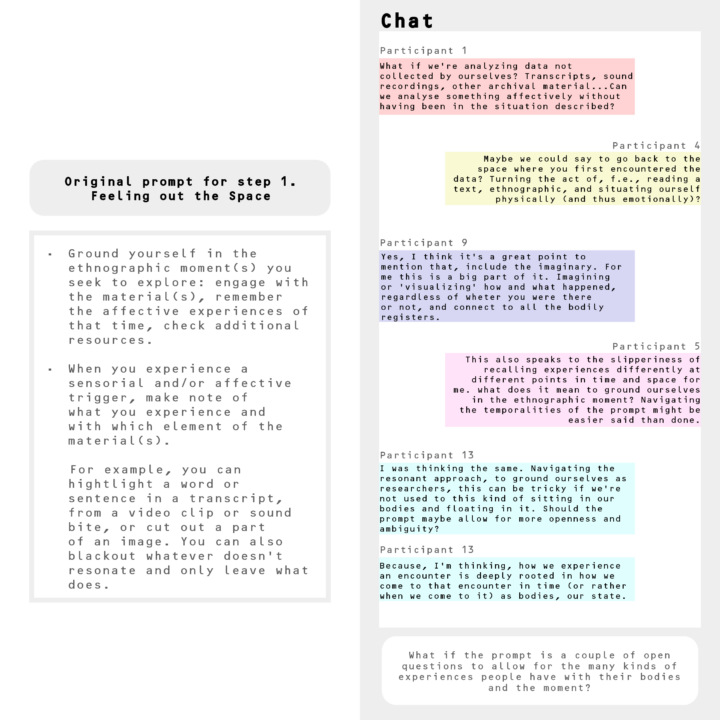
Fig 2. Collective discussion on VariaPad around step 1 of the original protocol.
However, ethnographic protocols shouldn’t be followed rigidly. We also used our protocol to prompt concrete, collective reflection and reformulated it several times during the workshop to fuel our experimentation with poetry. As we met online over Zoom, we used the general room for these joint discussions and its ‘break-out rooms’ for paired prompting activities. To document our collective reflection, we added two digital platforms to our collaborative experimental space. One was Milanote, a collaborative mood-boarding space, where we uploaded our writing and maintained an archive of inspirational materials. The other was Etherpad, a collaborative text-based space, where we made notes and tracked reflections. This documentation of the experimental process became the launching pad for this thematic thread.
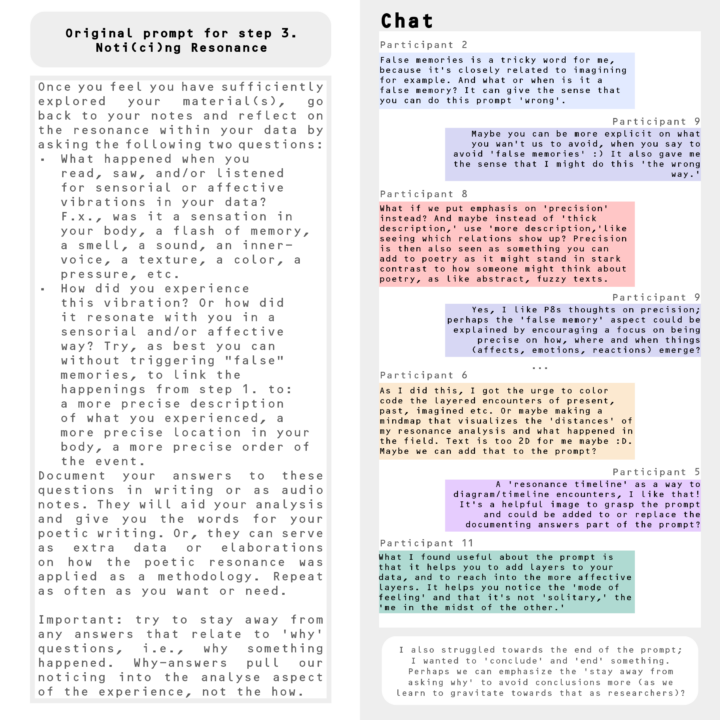
Fig 3. Collective discussion on VariaPad around step 2 of the original protocol.
Each contributor offers a nuanced, concrete, and passionate account of their experience practicing poetic resonance during and after the workshop in their essay. Their words made the air in our office crackle and pop like static electricity; we longed for home with Rebecca Appleton, we felt the weight of climate change with Jodie Jarvis, we mourned the loss of her mother with Mia Jess, we burned with fury after an interaction at work with Mist Særós Hrannarsdóttir, we were humbled by fire with Marvin Heine, we hugged the unknown with Stephanie L. Ellison, and we struggled with Eva van Roekel in the aftermath of incomprehensible atrocities in Argentina. We hope their essays – together with our protocol – will seize your bodies too and spark your own experiments with poetry.
Our Poetic Resonant Protocol
This protocol consists of three steps that build on each other: feeling out the space, noti(ci)ng resonance, and writing up vibrations. The design guides you through the experimental process of analyzing data with poetic resonance. A figure visualizes each step: the red box describes the prompt, and the blue box states how to document the experience. Brief text accompanies each figure to explain the prompt further and discuss the analytical engagement it engenders.
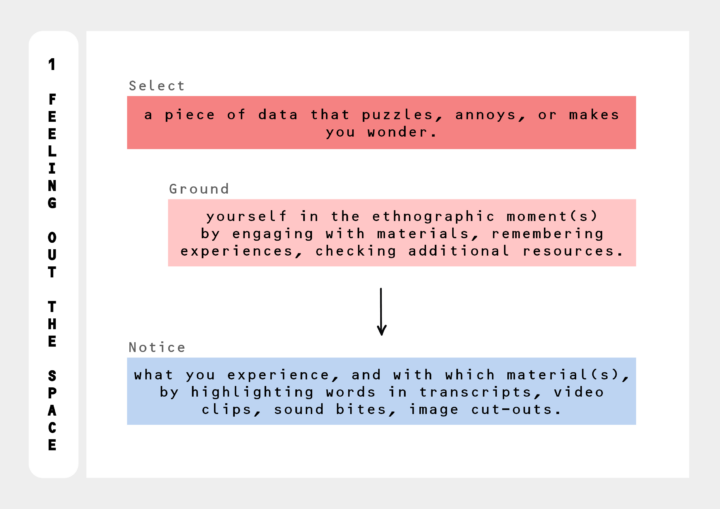
Figure 4. Step 1: Feeling out the Space.
In step 1, Feeling out the Space, you select an object of inquiry that puzzles, annoys, or in any way makes you wonder. An object that prompts more questions than immediately recognizable answers. The focus on such an object is an invitation to engage with messy, vague data in ethnographic analysis, seeking wonder and surprise rather than what is easier to know or already theoretically-familiar.
Let the object affect your body in the present, paying detailed attention to all the intensities as you dwell in the data.
Starting from the unknown, we ask you to ground yourself in the ethnographic moment that produced your object, reinvoking that moment in space and time by reanimating the object with your body using its relations with other materials you collected and memories you hold. This activity extends the entangled, embodied engagement of participant-observation during fieldwork into the analysis process, allowing the same process of interpretation, reinterpretation, and ongoing reflection to address the field’s unpredictability and help us explore slippery data (Dourish, 2014). Thus, this prompt purposefully makes room for surprise by building on our bodily relation to data in ethnographic research and activating it like a tuning fork to feel out vibrations across time and space.
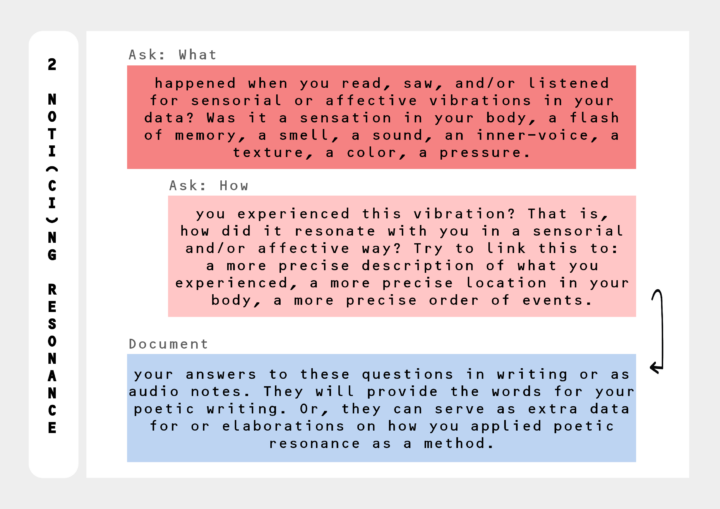
Figure 5. Step 2: Noti(cing) Resonance.
With a sense of the affective space of your object, step two, ‘Noti(ci)ng Resonance’ dives deeper into the resonance of that moment: what happened as you attuned to the object and how you experienced it happening. While the prompt in step one looks at what happened in the production of the data object in the field, this prompt in step two unpacks what happened when you reinvoked the field site and let the object affect your body in the present, paying detailed attention to all the intensities as you dwell in the data. To dwell like this requires a granular focus, zooming in on sensations that often occur in the flicker of a moment; thus, the prompt encourages precision in these descriptions. Not to ‘uncover more truth’ or some similar pursuit. But to practice the poetic technique of ‘concreteness’ and give ourselves descriptions that can ground our scholarly writing.
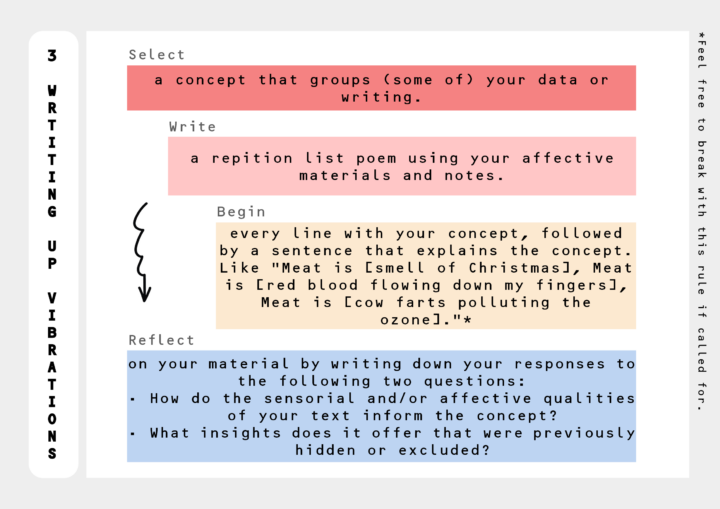
Figure 6. Step 3: Writing up Vibrations.
The third step, ‘Writing up Vibrations’, asks you to choose a keyword from these concrete descriptions to write a repetition poem from. Ideally, the word is important to your research somehow and/or related to your chosen object of inquiry. However, it doesn’t need to be a written word; it can also be an image. Then, use the concrete descriptions to come up with an explanation of the vernacular, theoretical, lyrical, cultural, and/or social meaning of the key word, following the pattern ‘[key word] is …’ as exemplified by the diagram with “meat is …”
Once written, the repetition poem can also become a suspension of timespace for the reader to explore the multiplicity of a word as lived experience.
This poetic prompt continues the affective resonant exploration of the prompts in steps one and two from field to paper, maintaining the “suspension of timespace” (Ballestero & Winthereik, 2021, p. 6) to sense out and think through data with the body. Once written, the repetition poem can also become a suspension of timespace for the reader to explore the multiplicity of a word as lived experience. Under the guidance of the rhythmic beat and concrete imagery, the poem offers sensory mechanisms to transfer the ethnographer’s lived experience and knowledge of it to the reader’s body, forging rich connections as it resonates with their personal experiences and adds them to the knowledge imparted by the poem.
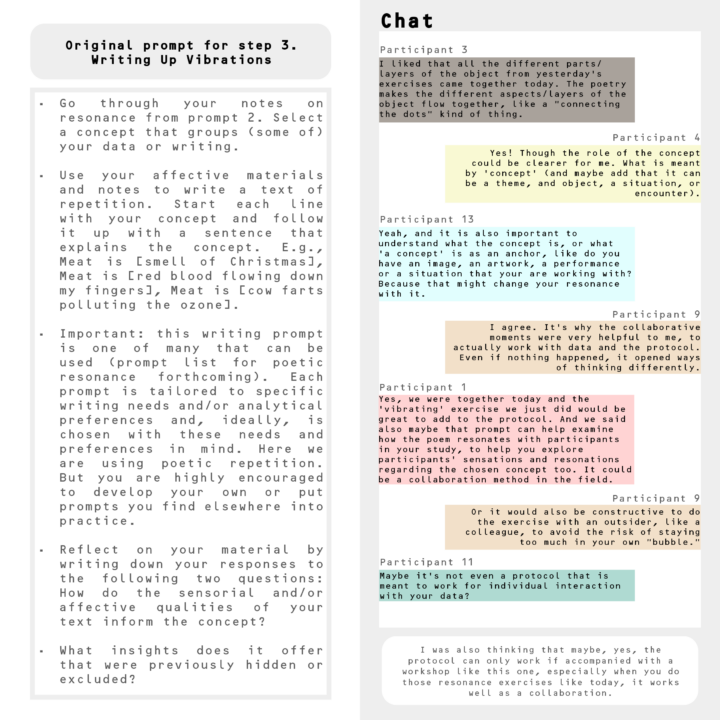
Figure 7. VariaPad discussion on the participants’ experience reading their poem to each other.
So far, each step of the protocol focuses on prompting exercises you can do on your own. However, the workshop demonstrated that these prompts can also be fruitful as collaborative exercises with colleagues and interlocutors. For example, after each participant wrote their repetition poem, we asked them to pair up and read it aloud to each other. The writer then interviewed the listener about what they experienced as the text affected their body and how. The writer used the listener’s experiences to probe further into their understanding of their keyword and/or their object of inquiry, seeing if any insights had previously gone unnoticed or were undersensed. This collaborative exploration deepened affective connections between the object and the ethnographer through direct interaction with an audience, gifting them the experiences and knowledge of another body. You can receive that same gift by incorporating this collaborative exploration into the protocol.
Featured image: The poetic resonance banner, provided by thread curators.
References
Ballestero, A., & Winthereik, B. R. (Eds.). (2021). Experimenting with Ethnography: A Companion to Analysis. Duke University Press.
Bell, L., Flynn, A., & O’Hare, P. (2022). Taking form, making worlds: Cartonera publishers in Latin America(First edition). University of Texas Press.
Brady, I. (2009). Foreword. In M. Prendergast, C. Leggo, & P. Sameshima (Eds.), Poetic Inquiry: Vibrant Voices in the Social Sciences (pp. xi–xvi). BRILL.
Dernikos, B. P. (2020). Tuning into ‘fleshy’ frequencies: A posthuman mapping of affect, sound and de/colonized literacies with/in a primary classroom. Journal of Early Childhood Literacy, 20(1), 134–157. https://doi.org/10.1177/1468798420914125
Dourish, P. (2014). Reading and Interpreting Ethnography. In J. S. Olson & W. A. Kellogg (Eds.), Ways of Knowing in HCI (pp. 1–23). Springer New York. https://doi.org/10.1007/978-1-4939-0378-8_1
Ellermann, A., Køhlert, F. B., Leavitt, S., & Paquet, M. (Eds.). (2025). Crossing lines: Comics about human migration. University of Toronto Press.
Faulkner, S. L. (2019). Poetic Inquiry: Craft, Method and Practice (2nd ed.). Routledge. https://doi.org/10.4324/9781351044233
Galvin, K. T., & Prendergast, M. (Eds.). (2016). Poetic inquiry II: Seeing, caring, understanding: using poetry as and for inquiry. Sense Publishers.
Görlich, A. (2023). Practicing Poetic Inquiry: Bringing Affective Perspectives into Qualitative Research. Scholarship of Teaching and Learning in the South, 7(1), 129–146. https://doi.org/10.36615/sotls.v7i1.357
Irving, A. (2017). New York Stories: Narrating the Neighbourhood. Ethnos, 82(3), 437–457. https://doi.org/10.1080/00141844.2015.1084020
Kazubowski-Houston, M. (2010). Staging Strife: Lessons from Performing Ethnography with Polish Roma Women. McGill-Queen’s University Press. https://doi.org/10.1515/9780773581203
Korsby, T. M., & Stavrianakis, A. (2018). Moments in Collaboration: Experiments in Concept Work. Ethnos, 83(1), 39–57. https://doi.org/10.1080/00141844.2015.1137606
Korsby, T. M., & Stavrianakis, A. (2021). Object Exchange. In A. Ballestero & B. R. Winthereik (Eds.), Experimenting with Ethnography: A Companion to Analysis. Duke University Press.
Kusserow, A. S. (2020). Opening Up Fieldwork with Ethnographic Poetry. Anthropologica, 62(2), 430–436. https://doi.org/10.3138/anth-2019-0068
Lehmann, O. V., Chaudhary, N., Bastos, A. C., & Abbey, E. (Eds.). (2017). Poetry And Imagined Worlds. Springer International Publishing. https://doi.org/10.1007/978-3-319-64858-3
Marcus, G. E. (2010). Contemporary Fieldwork Aesthetics in Art and Anthropology: Experiments in Collaboration and Intervention. Visual Anthropology, 23(4), 263–277. https://doi.org/10.1080/08949468.2010.484988
Martínez, F. (2021). Ethnographic Experiments with Artists, Designers and Boundary Objects: Exhibitions as a research method. UCL Press. https://doi.org/10.14324/111.9781800081086
McCrary Sullivan, A. (2009). On Poetic Occasion in Inquiry. In M. Prendergast, C. Leggo, & P. Sameshima (Eds.), Poetic Inquiry: Vibrant Voices in the Social Sciences (pp. 111–126). BRILL.
McLean, S. (2020). “SEA”STORIES Anthropologies and Poetries beyond the Human. In C. McGranahan (Ed.), Writing anthropology: Essays on craft and commitment (pp. 201–205). Duke University Press.
Paasonen, S. (2023). Ambiguous Affect: Excitements That Make the Self. In The Affect Theory Reader: Worldings, tensions, futurs (pp. 85–102). Duke University Press.
Pandian, A., & McLean, S. (2017). Crumpled paper boat: Experiments in ethnographic writing. Duke University Press.
Prendergast, M. (2009). “Poem is What?” Poetic Inquiry in Qualitative Social Science Research. International Review of Qualitative Research, 1(4), 541–568. https://doi.org/10.1525/irqr.2009.1.4.541
Sameshima, P., Fidyk, A., & James, K. (2017). Poetic Inquiry: Enchantment of Place. Vernon Press.
Sansi, R. (2020). Utopia and Idiocy: Public Art Experiments in the Metropolitan Region of Barcelona. City & Society, 32(2), 250–271. https://doi.org/10.1111/ciso.12277
Scholtes, U. (2023). Finding Words for Feeling Bodies: Exploring Drawing Techniques in Dutch Care Practices. Medical Anthropology, 42(8), 828–844. https://doi.org/10.1080/01459740.2023.2269468
Stone, N. (2020). Poetry and Anthropology. In C. McGranahan (Ed.), Writing Anthropology: Essays on Craft and Commitment (pp. 189–194). Duke University Press. https://doi.org/10.1215/9781478009160
Stone, N. (2023). Pinelandia: An anthropology and field poetics of war and empire. University of California Press.
Sullivan, A. M. (2009). On Poetic Occasion in Inquiry: Concreteness, Voice, Ambiguity, Tension, and Associative Logic. In M. Prendergast, C. D. Leggo, & P. Sameshima (Eds.), Poetic Inquiry: Vibrant Voices in the Social Sciences (pp. 111–126). Sense Publishers.
van Roekel, E., & Murphy, F. (Eds.). (2024). A Collection of Creative Anthropologies: Drowning in Blue Light and Other Stories. Palgrave Macmillan.
Abstract: This thematic thread presents experiments, exercises, and reflections stemming from a two-day collaborative, practice-led workshop with ‘poetic resonance’. The concept of poetic resonance grew out of a research interest in, and a need for, an ethnographic investigative approach capable of capturing the intangible yet palpable forces of emotions, moods, atmospheres, and tensions that reverberate within and across spaces, bodies, and interactions. Drawing on broader conversations in poetic inquiry, we approach the ‘poetic’ as a sensibility. An embodied, reflexive form of attention to field encounters that resists the urge to pin down singular meanings and encourages analytical surprise. To support this, we designed a flexible protocol that guides researchers in selecting puzzling data, noticing how it ripples through the body, and writing poems that hug multiplicity rather than resolve it. The contributions gathered here extend these experiments, each exploring what becomes possible when ethnography can resonate, and we offer them – along with the protocol – as an invitation for readers to try their own poetic experiments.