
This essay is as much about anthropology as it is about education, ecology, art, and political imagination. I want to begin with a scene from the mountains of Aileu, a district in the center of Timor-Leste. The air is cold, a kind of cold that makes your breath visible, and children are sweeping dew off the schoolyard with self-made leaf brooms. A group of girls is humming a popular harvest song. At the edge of the yard, the soil is already being loosened for the first planting of the season.
What might seem like a simple gardening lesson is part of Timor-Leste’s new permaculture-based national school curriculum, in which school gardens and Arts and Culture classes cultivate a “pedagogy of hope” and where knowledge is not only learned from books but emerging from embodied and sensory experiences of collective learning. Soil, water, and community become part of the classroom, linking ecological care with social and cultural life. Starting in 2025 and 2026, the new permaculture-based national school curriculum aspires to transform historically grown schooling routines that reproduce colonial and missionary values into sites of decolonial emancipation, where children and teachers experiment with alternative ways of learning and work towards dignified futures.

Fig. 1 Newly established community garden near a primary and secondary school. Aileu, 2024. Photo by the author.
After two decades of experimenting with school curricula and attempting to evolve from Portuguese pedagogies and Indonesian mental infrastructures, the new school curriculum aspires to integrate practical lessons learned during the struggle for independence into pedagogic action that relates humans to their local ecologies. The new curriculum values Timorese art and culture as key to nurturing these aspirations. It encourages respect for and the valuation of Indigenous knowledge and extends the liberation struggle of the 1970s under Indonesian occupation (1975-1999), which followed 400 years of Portuguese colonialism, in which ecological literacy was passed on between persons and families living clandestinely in the hills and mountains. To increase their chances of survival, families had learned which plants could be eaten and used as remedies for illnesses, and which foraging and wild garden diet improved psychological and physical health.
In addition to this historical reference made by activists and facilitators, Timor-Leste permaculture resonates with a range of decolonial and feminist approaches from the global south and beyond that highlight the relational nature of ecological knowledge. Some have argued that permaculture is an Australian import, considering its first manifesto was written by two Australian ecologists and environmentalists (Mollison and Holmgren: Permaculture One, 1978). However, this is not how permaculture practitioners in Timor-Leste see it. They emphasize that it is a method for building community resilience: it involves gardening practices grounded in local cosmologies that not only consider but also prioritize more-than-human collaboration with the spirit owners of water, the guardians of forests, and the moral anatomies of land and kin (Bovensiepen, 2015). Unlike other global versions of permaculture education, which can sometimes slip into lifestyle branding, permaculture in Timor-Leste has grown into an alternative ecology and economy rooted in care, community, and connection (Stodulka, 2024).
Permakultura Timor Lorosa’e
Permaculture was introduced to Timor-Leste in the early 2000s by Eugenio Lemos and the local grassroots NGO Permakultura Lorosa’e, Permatil. Learning together with Australian volunteers during the hectic times after Timor-Leste’s independence in 2002, small-scale gardening initiatives illustrated how permaculture resonated with local subjectivities and cosmologies that encompass human and more-than-human life, spirits, and supernatural beings. Local understandings of rai (soil/land) and ema (people) echo permaculture’s ethical emphasis on care, cooperation, and relational responsibility. Timorese permaculture attunes to the customary knowledge, ethos, and practice of ancestral landscapes (Bovensiepen, 2015), and to how rural communities in Timor-Leste rebuild social and spiritual connections in everyday life, and after conflict and displacement.
Such achievements offer empirical grounding for hope. Hope that is not rhetorical but cultivated through soil, water, and collective labor.
Timor-Leste is an extraordinarily young nation, with a mean age of 17.4 years, burdened by legacies of Portuguese colonialism, Indonesian occupation, and the long-term scars of violence (Sakti 2013; Webster 2013). The country’s aspirations, ba futuro, “going towards the future”, collide with structural precarity: contested language policies, reliance on offshore oil, looming economic crisis, climate change, erosion, and heavy donor influence (Bovensiepen 2021). Despite these challenges, national discourse is saturated with future-oriented hope (Stodulka 2024; Kammen 2009), an enduring hope of political emancipation, economic development, and pedagogical liberation. The new national school curriculum feeds into this hope: it opens pathways to reduced malnutrition, to recovering landscapes, and to sustainable economic development, because hope, in this case, is not a mere rhetoric of endurance or appeasement (Stodulka & Lemos, 2026). It arises from Timorese permaculture’s strong empirical evidence of ecological recovery over the last two decades (Lemos & Higgins, 2026). Such achievements offer empirical grounding for hope. Hope that is not rhetorical but cultivated through soil, water, and collective labor.
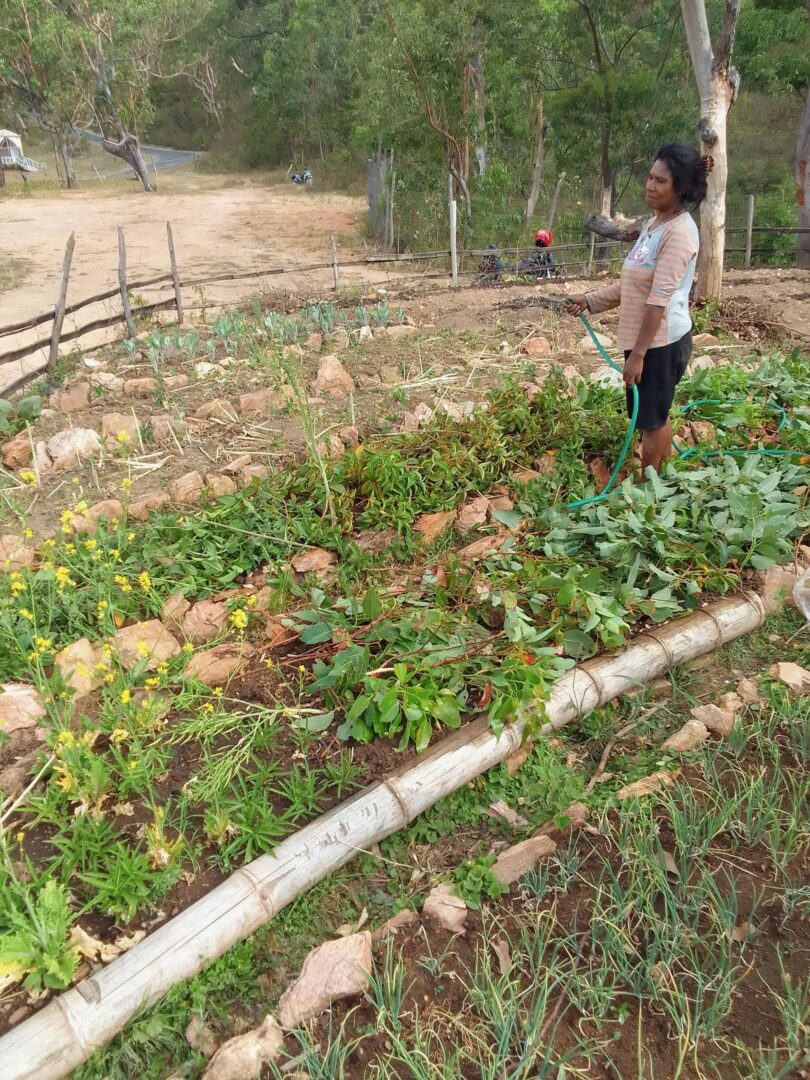
Fig. 2. Youth-group community and school garden, and plant nursery. Aileu, 2024. Photo by the author.
Permaculture School Gardens and the Art and Culture Curriculum
The new curriculum’s five competence areas, ‘Knowledge and Understanding’, ‘Traditional Culture’, ‘Research’, ‘Communication and Collaboration’, and ‘Critical and Creative Thinking’, taught in Tetum, the national language aside from Portuguese, create an emplaced and cyclical, instead of a linear pedagogy in which students move between gardens, classrooms, forests, and community spaces.
Let me return to Aileu again to illustrate this with a short example (see Stodulka & Lemos, forthcoming, for a more detailed description). At a middle school that piloted the new curriculum in 2024, students and teachers performed a harvest dance (sau batar) as part of their Arts and Culture class. Their teacher linked the movements to permaculture ethics: observing natural patterns, celebrating diversity, and practicing collective care. Midway through the lesson, one student asked, “Why are we dancing in school? My family does this at home anyway.” The teacher explained that harvesting is closely related to planting, which in turn is connected to the flow of water, specifically rainfall, and is guarded by water spirits and elders known as the owners of the water (bee nain), all of which are integral to the design of new school gardens. Music, movement, spirits, custom, and ecology are thus intertwined, hope and aspiration enacted in practice rather than abstract rhetoric. For example, the Arts and Culture curriculum also considers more-than-human agency in the context of water conservation and science: students learn both about the cosmologies of water eels and buffaloes as central drivers of customary sociality and groundwater flows that initiate and connect mountaintop water repositories with terraced gardens and ancient springs at the foot of mountains.
Another morning, under the shade of a banyan tree, I spoke with Sebastião, a former teacher. “Pedagogy,” he said, “is not teaching. It is learning together.” He described reading the Brazilian educator and philosopher Paulo Freire’s “Pedagogy of Hope” (1992) as a young teacher: “Never pretend to know something you haven’t tried. If you don’t know, ask the group. Someone always knows.” He laughed: “I always teach with joking. Then the students remember. Sometimes they start laughing when they see me. That means they learned.”
The introduction of permaculture into Timor-Leste’s school system opens pathways for reimagining education as a practice of hope, ecological responsibility, and political autonomy.
Sebastião’s approach, inspired by Freirean dialogic pedagogy, is communicated through humor, relationality, and humility. In the new Arts and Culture curriculum, learning is not language-heavy; it is practice-driven and oriented. Laughter, smelling, touching, or tasting (e.g., soil) is not a distraction from learning – it is the medium of learning (Stodulka 2020, 2024).
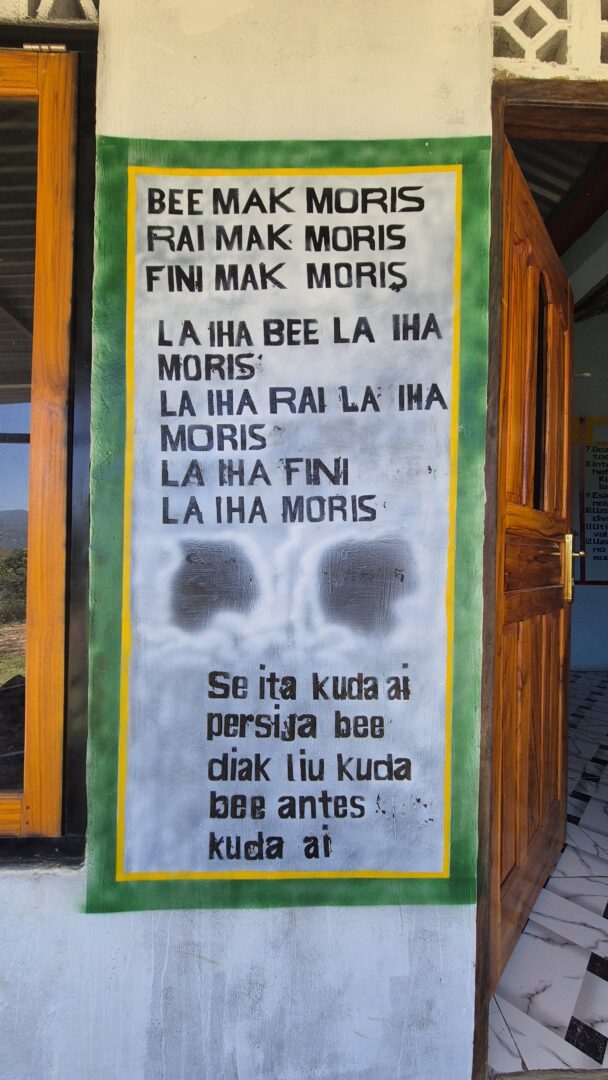
Fig. 3. Mural at a permaculture training center. Tilofe, Ermera, 2025. Photo by the author.
Water is life. The earth is life. Seeds are life. Without water, life cannot grow. Without land, life cannot stand. Without seeds, life cannot begin. If we plant, we must give water. For watering brings goodness to every seed – even before it touches the soil.
A Pedagogy of Hope? – Challenges, Tensions, and Open Questions
The introduction of permaculture into Timor-Leste’s school system opens pathways for reimagining education as a practice of hope, ecological responsibility, and political autonomy. But its transformative potential will depend on how it is taken up in everyday routines and learning. Teachers trained in colonial and modernist pedagogies must now decide whether to embrace a curriculum that asks them to teach through gardens and ancestral landscapes, and share local histories, including water springs (Palmer, 2015), while integrating the potency of spiritual beliefs and sacred spaces that animate the environment (Bovensiepen, 2015). Parents must weigh whether school gardens truly prepare their children for jobs in Dili or abroad, or whether they equip them with skills to remain in their communities. For children, the proof lies in practice, whether lessons on composting, seed-saving, or collective planting become part of their daily lives and viable options for their future pathways.
Permaculture has already shown what is possible. In Atauro, springs that once dried up during the Indonesian occupation due to deforestation have begun to flow again after permaculture initiatives revived surrounding vegetation. In Ermera, permaculture initiatives have restored ancestral trees, brought back fish, birds, and insects, and reanimated customary forms of cooperation and conviviality.
Permaculture’s pedagogy emerges as a next step in Timor-Leste’s liberation, offering a grounded, hopeful, and emancipatory education that cultivates not captive minds, but courageous, creative, and ecologically attuned generations and futures.
The new national Art and Culture curriculum feeds on hope and aspiration as drivers of educational policy. As anthropologists, we have learned from feminist scholars (e.g. hooks, 2003) that resonant pedagogies of hope, built on students’ andteachers’ interactions in an anti-oppressive manner that encourages reflexivity, dialogue, and criticality, are a precursor to emancipated learning curricula liberating “captive minds” (Alatas, 1972). We have learned from decolonial thinkers, such as Francoise Vergès, Farid and Husein Alatas, who show how colonial knowledge systems create a captive mind dependent on external, often Eurocentric, and ‘modern’ intellectual authority, while the liberation pedagogue Paulo Freire explains how oppressive educational structures produce passive learners. Taking their very different biographies, histories, and intellectual projects aside, they all agree on one premise: education must cultivate critical consciousness, dialogue, and intellectual autonomy if it is to become genuinely decolonial.
In this sense, the new curriculum embodies aspirations that are both relational and consequential (Amrith, Sakti, & Sampaio, 2023): futures that are social rather than individual, tied to collective well-being rather than extractive growth. Its orientation toward water, food, health, and cultural vitality echoes the enduring ethos of the liberation movement, a luta kontinua (“the struggle continues”), but shifts this struggle toward ecological and pedagogical terrains. Permaculture’s pedagogy thus emerges as a next step in Timor-Leste’s liberation, offering a grounded, hopeful, and emancipatory education that cultivates not captive minds, but courageous, creative, and ecologically attuned generations and futures. Futures in which young people imagine hope not as escape, but as grounding and homecoming. And futures in which education becomes what it has always had the potential to be: an art and a practice of living well – together.
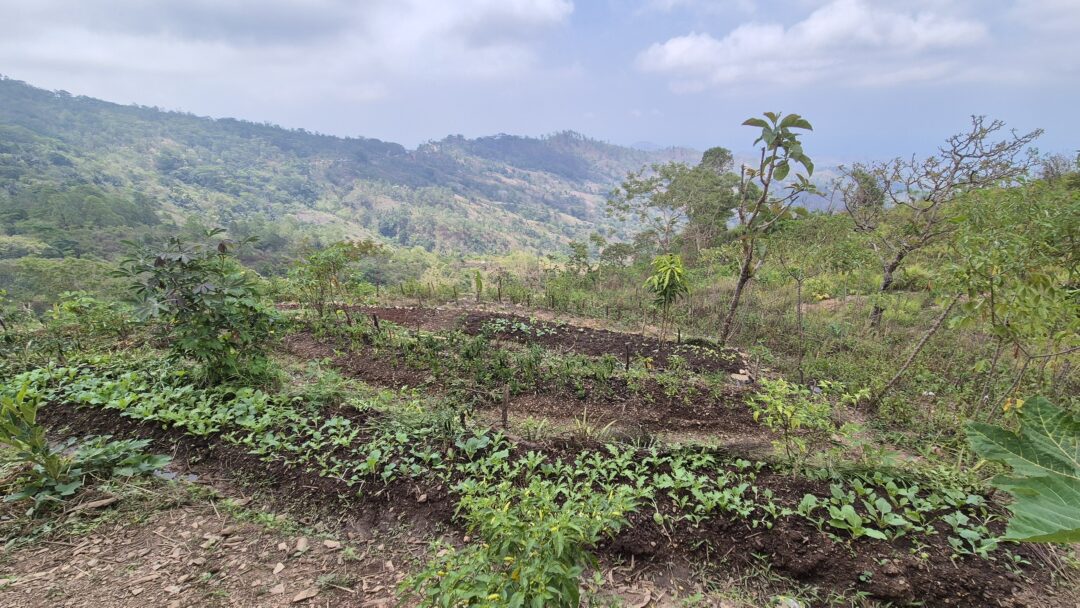
Fig. 4. Community training garden. Aileu, 2025. Photo by the author.
Featured image: Newly established community garden near a primary and secondary school. Aileu, 2024. Photo by the author.
References
Alatas, S. H. 1972. “The captive mind in development studies.” International Social Science Journal 24(1): 9–25.
Amrith, M., Sakti, V. K., and Sampaio, D., eds. 2023. Aspiring in later life: Movements across time, space, and generations. New Brunswick, NJ: Rutgers University Press.
Bovensiepen, J. 2021. “Can Oil Speak? On the Production of Ontological Difference and Ambivalence in Extractive Encounters.” Anthropological Quarterly 94: 33-63. https://dx.doi.org/10.1353/anq.2021.0013.
Bovensiepen,J.2015. The Land of Gold: Post-Conflict Recovery and Cultural Revival in Independent Timor-Leste. Ithaca: Cornell University Press.
Freire, P. 1992. Pedagogy of hope: A reencounter with the pedagogy of the oppressed. New York: Paze Terra.
hooks, b. 2003. Teaching community: A pedagogy of hope. New York: Routledge.
Kammen, D. 2009. “Fragments of utopia: Popular yearnings in East Timor.” Journal of Southeast Asian Studies 40(2): 385–408. https://doi.org/10.1017/S0022463409000216
Lemos, E., and Higgins, P. 2026. “Satellite-based evaluation of the efficacy of debun and weirs on water resources and ecosystem restoration in Timor-Leste.” Global Discourse (published online ahead of print 2026). https://doi.org/10.1332/20437897Y2026D000000094
Palmer, L. 2015. Water politics and spiritual ecology: Custom, environmental governance, and development. London: Routledge.
Sakti, V. K. 2013. ““Thinking too much”: Tracing local patterns of emotional distress after mass violence in Timor-Leste.” The Asia Pacific Journal of Anthropology 14(5): 438–454.
Stodulka, T., & Lemos, E. forthcoming. “Gardens of Hope: Permaculture, Decolonial Emancipation, and Aspirational Futures in Timor-Leste.” Human Organization.
Stodulka, T. 2020. “Worlding permaculture school gardens: Translocal connectivities and minor utopias in Timor-Leste.” American Behavioral Scientist 64(10): 1512–1525. https://doi.org/10.1177/0002764220947755
Stodulka, T. 2024. “Tasting the soil and sensing the future: Localizing pedagogies of resistance in Timor-Leste’s Permaculture Youth Camps.” American Behavioral Scientist, online first.
Webster, D. 2013. “Languages of human rights in Timor-Leste.” Asia Pacific Perspectives 11(1): 5–21.
Abstract: In Timor-Leste, children now learn to grow vegetables, conserve water, and design permaculture gardens as part of the national school curriculum. This essay traces how permaculture developed from small grassroots activism into an important part of public education. Drawing on long-term collaborative fieldwork with activists, teachers, and students, I explore how school gardens and Arts and Culture classes introduce ecological knowledge and critical reflection in classrooms. The curriculum encourages young people to imagine futures rooted in Timorese landscapes, histories, and Indigenous practices. Unlike earlier development and schooling models driven by governments and donors, permaculture education aims to cultivate a national school curriculum grounded in healthy soils, revived water sources, traditional seeds, and historical awareness. I argue that permaculture and liberation pedagogy help challenge extractive ideas of progress and development while opening pathways toward resilient livelihoods, sustainable ecologies, and emancipated futures.