Saba, 23, from Sanandaj. The night before, she had begged her father not to go — his office was next to the local police station. He left early in the morning. The fighter jet had already passed when the sound of the bomb rolled through the neighborhood. He was killed within minutes of arriving:
“I don’t know how I got to my father’s office. There was nothing left of it. The image of my father being torn apart haunts me more than his death itself.”
At the very hours Saba stood among the rubble, Iran’s internet connectivity had dropped to below one percent. More than 2,100 hours have now passed since that shutdown began — the longest documented outage in contemporary world history, following more than forty days of bombardment. The ceasefire has held. The internet has, partially, returned. Thousands of sites remain filtered, and affordable VPNs have become the ordinary tools of reconnection. But this is not a return to what was. This is an arrival somewhere new, and harder.
The Arithmetic of Survival
The war did not arrive into a vacuum. It descended on a society already worn through by years of cascading crises — the fuel riots of November 2019, the protests of January 2026, and between them the Woman Life Freedom uprising, ignited when Jina Mahsa Amini died in custody over a few strands of hair that should have been beneath a headscarf. Each wave rose from the same accumulated weight: precarious livelihoods, a currency that had collapsed by more than five hundred percent in three years, and the slow erosion of any sense that improvement was possible.
During the eighty-eight days of near-total disconnection, 1GB of mobile data cost the equivalent of one to three days’ wages — for those who could find any signal at all.
By the time the bombs fell, a worker earned less than five dollars a day. During the eighty-eight days of near-total disconnection, 1GB of mobile data cost the equivalent of one to three days’ wages — for those who could find any signal at all. Outside bakeries, queues formed in the rain — long, silent, people mourning a life they once had. Street vendors appeared overnight selling kerosene at prices hundreds of times the usual rate. On the last night before the ceasefire, families bought power banks and torches. Children read fear in their parents’ faces before they could read words.
The war did not create these conditions. It buried people who were already running out of air.
The Black Hole and its Beneficiaries
When a people fall silent, others rush to speak for them.
NetBlocks has documented this pattern across multiple episodes of unrest in Iran: disconnection functioning not as an emergency measure but as a structural one, removing the public sphere from citizens’ reach at the very moments it matters most — creating a vacancy where the concept of “the people” becomes available for appropriation.
In moments of silence, official channels read that silence as consent. But this expropriation does not come only from one direction. Satellite television channels and social media networks aligned with dominant currents within the monarchist opposition perform a parallel operation: when the internet goes dark, they project a population uniformly craving rescue through external intervention, positioning themselves as the only conduit between Iran and the world.
This binary obscures a far more fractured landscape. Iran’s broader opposition is not a monolith — it encompasses labor organizers imprisoned for their work, writers and journalists cycling in and out of detention, teachers’ unions, nurses’ collectives, and Kurdish, Baluch, and Azerbaijani movements whose contentious relationship to the Iranian state long predates this war. Many opposed the war outright. But some did not — finding in it, despite everything, a moment of possible rupture, a desperate wager on change.
The voices that do not fit are rendered inaudible twice over: first by the shutdown itself, then by the editorial choices of those who claim to break that silence. Even diaspora voices that genuinely sought to amplify the marginalized found themselves drowned out — accused from one side of serving the state, accused from the other of harboring sympathy for intervention.
The voices that do not fit are rendered inaudible twice over.
Maryam, 30, from Ahar: “Hearing the sound of Iran’s missiles filled me with a deep pride — it swept away all my fear.” Erfan, 31, from Tehran: “They had built obedient robots who parroted whatever these opposition outlets said, and sealed eyes and ears against any form of logic or criticism.” Neither is lying. Both are living inside information architectures that were built for them, not by them.
Narges, 25, from Tabriz, stands somewhere between them — or perhaps nowhere at all: “Some people saw every explosion as a lantern in their own darkness. I found all of it repulsive — though in private, I envied them that delusion.”
A Tiered Silence
The one percent that NetBlocks recorded as still online were not a random sample. At the top: officials on unfiltered lines and state-linked media whose channels remained active throughout the blackout. Below them: a professional tier who could apply, through recognized institutions, for metered and monitored access. Below them: those who could afford a VPN on a black market where prices had risen forty to fifty times, often for connections that dropped within hours. And below them: everyone else, sealed inside a domestic network where sending a message felt like speaking into a room they knew was being listened to.
What emerged was not simply a communication gap but a rentier economy of silence: scarcity manufactured at the top and monetized all the way down, reproducing — in the register of data — the same inequalities already structuring access to bread, medicine, and safety.
Shabnam, 21, from Sarpol-e Zahab, gave birth the same night the ceasefire was announced: “What does politics matter to me? I just wanted myself and my baby to be safe.” Soheila, 29, from Tabriz, whose fiancé was a soldier: “If the person I love is gone, what does it matter who ends up in charge?”
These are not apolitical statements. They are the logic of survival — a rational human response to conditions no one chose. And yet, within every available political narration, they have nowhere to land.
Naked Fractures
These fissures did not form during the war. The war only stripped away what had covered them.
Some of the most revealing moments of this research occurred within the author’s own classroom — a formal university course in the sociology of communications, conducted online during and after the conflict, where sessions were recorded on the national intranet. The architecture of the teaching space was itself a mirror of the broader situation: accessible but surveilled, open but not free.
In one session, Ahmad — a student who throughout the war had expressed unambiguous support for the state — declared that those killed or targeted during the conflict had been identified through artificial intelligence and the international internet. The classroom fell silent. Most students said nothing. Two sent question-mark and exclamation-point stickers, tentatively, as if testing the water with a single toe.
Then Mehran — who had been quiet for weeks — spoke:
“You know why we’re in this class? We’re supposed to critically evaluate information. But just because state television says something, we’re supposed to believe it? The internet is cut. And even this national network — you get disconnected every few minutes, you get dropped from the system, and you’re afraid to use any domestic app because you know you’re being monitored.”
The instructor — this author — interrupted, contrary to every habit of waiting for a student to finish, and reframed Mehran’s words in safer, more abstract terms: the importance of access to information, the principle that connectivity is a public utility like water or electricity. The session’s recording could not be deleted. The intervention was not intellectual. It was protective.
The intervention was not intellectual. It was protective.
What that classroom held — in its silences as much as its speech — was a compressed version of what the shutdown had produced at the scale of a society. The students who stayed quiet were not indifferent. They had calculated the cost of speaking and found it too high. Their silence was not absence. It was data.
This is the fracture the war made visible. Inside Iran, what had been a latent tension — managed through avoidance, coded language, strategic ambiguity — has become, for many, a chasm. Colleagues who once shared lunch no longer share opinions. Families negotiate silence as a condition of coexistence.
Outside Iran, the fracture follows the same logic. Within diaspora digital spaces, the demand for loyalty displaced analysis, and complexity was treated as betrayal. The vocabulary of liberation — the people, freedom, the nation — circulated on all sides, emptied of shared meaning, repurposed for incompatible ends.
Wars of this kind do not only kill people. They destroy the conditions under which people can act as political subjects.
Fatemeh, 68, from Tabriz — a Turkic woman from Iran’s northwest who has lived through the Pahlavi monarchy and the Islamic Republic, and found in neither a face turned toward her:
“Sixty-eight years of my life, and fortune never once showed me a kind face. I don’t think they’ll let there be peace. What can we do? Nothing but pray.”
Wars of this kind do not only kill people. They destroy the conditions under which people can act as political subjects. The lines now being drawn — between those who wanted the war and those who did not, inside and outside — will take generations to dissolve. For the war, and the appropriation of its outcasts, will not end with a ceasefire or a memorandum. The voices that were silenced are still being spoken for — and that is the second blackout that has yet to be lifted.
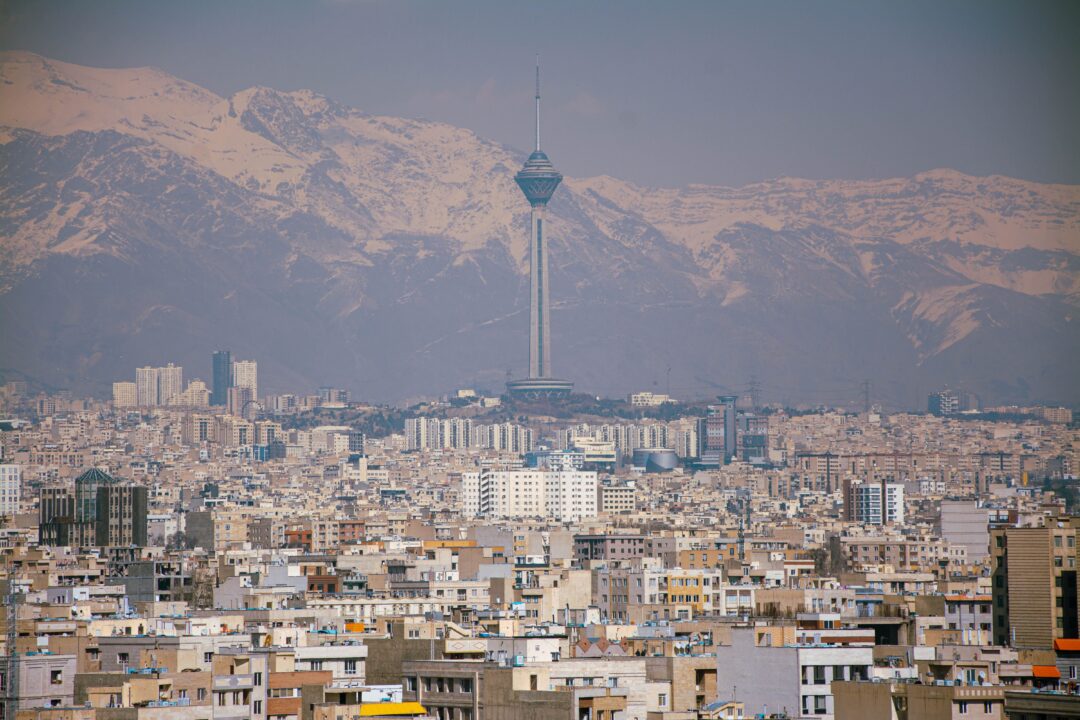
Featured image: photo by Mehdi Salehi via Pexels.
All interviewees’ names have been changed for security reasons. Classroom observations are drawn from the author’s own teaching practice and have been rendered in a form that protects the identities of all students involved.
Abstract: This fieldnote examines Iran’s internet shutdown — 2,100 hours accumulated over an eighty-eight-day near-total blackout, the longest documented outage in contemporary world history — not as a technical failure but as a political form. The internet has since partially returned under the same heavily filtered architecture that preceded the war — a vast array of websites, platforms, and applications blocked, access navigable only through VPNs. Drawing on ethnographic interviews and classroom observations conducted during and after the conflict, it traces how enforced silence generates a vacancy: a void in which “the people” becomes available for competing appropriations. State media reads silence as consent; dominant currents within the monarchist opposition project a population uniformly seeking rescue through external intervention. But the shutdown also illuminates a deeper architecture of fracture — one that did not begin with the war, but was laid bare by it. This piece attends to the fractured, irreconcilable accounts of people whose experiences fit no available political narration — and asks what it means to speak, and to be spoken for, when speaking itself carries a price.