
“In many cases, things start with a judgement. Think of the right to khula without a husband’s consent”, a young woman lawyer tells us in Lahore. “The court can play a huge role – they can actually make the law”. She is talking about a recent landmark judgement from the Islamabad High Court, which recognises a wife’s right to matrimonial property at the point of divorce under Islamic family law in Pakistan. The new jurisprudence draws attention to the economic value of not just women’s productive labour, but also the labour that they extend towards their marital families and households in maintaining the home and raising children, in ways that have the potential to revolutionise jurisdictional boundaries over women’s reproductive labour, that’s to say the “laws of social reproduction” (Kotiswaran 2023) in Pakistan. It shows how women’s insistence that their possessions stand in for their contributions to marriage (Smart 2007; Zulfiqar 2022; Carsten 2025) is shaped by the law, but can also – through such a landmark case – reshape the law and wider politics. The judgement indicates that Pakistani jurisprudence is moving to approach marriage in terms of partnership, reciprocity and recognition of mutual contributions. If – as the young lawyer expresses – this form of judicial reasoning takes hold in the lower courts, the judgement has potentially crucial implications for gender and economic justice in Pakistan.
The young lawyer invokes the right to khula without a husband’s consent. Islamic family law in Pakistan distinguishes two main forms of divorce. The first, talaq, is the unilateral and mainly out-of-court divorce at the husband’s initiative. The second, the khula or khul’, may occur outside the courts, by mutual agreement of spouses; but more commonly it takes the guise of a divorce granted on the woman’s initiative by the court. The landmark case that the lawyer was referring to, Mst. Balqis Fatima v. Najam ul Ikram Qureshi, from 1959, overruled Moonshee Buzloor Ruheem v. Shumsoonnissa Begum (1867) in which the Privy Council held that the husband’s consent was needed for khula. Since this case, the courts in Pakistan have not required the husband’s consent for a khula. As stipulated by the 1964 Family Courts Act, however,a judge may direct the wife to return the dower given by the husband at the time of the marriage (the haq mahr) – or a portion of it – in order to grant a khula. Thus “feminist scholarship usually interprets the return of mahr as a divorce by purchase or divorce by ransom” (Holden 2026, p.54). Though the khula is seen as part of pro-women legislation in that it has expanded women’s access to divorce, the framework still gives men greater control in the marriage, since the wife’s offer of “compensation that may induce him to liberate her” via the khula (Holden 2026, p.47) has no parallel in the talaq, which is unilateral.
Pakistani jurisprudence is moving to approach marriage in terms of partnership, reciprocity and recognition of mutual contributions.
Strengthening women’s financial rights, there has been a trend among judges to overlook the requirement that the wife return the haq mahr when granting a khula, especially when her husband’s conduct compelled her to seek the divorce(Holden 2026). The courts have also upheld women’s rights to any unpaid financial maintenance during the marriage; to financial maintenance during the three-to-four month iddat period after the end of a marriage; and to recovery of the jahez (dowry items given by the wife’s family) upon divorce (Abbasi 2026). However, recognition of a wife’s right to matrimonial property is unchartered doctrinal territory. Under settled Pakistani law, a divorcing wife has no automatic legal entitlement to share in any assets accumulated during the marriage (Abbasi 2021; Malik et al. 2021). On this point, family law in Pakistan is consistent with many Muslim-majority states, including Bangladesh as well as Muslim minorities in India, where separate property regimes remain. However, other Muslim-majority countries have developed shared asset regimes over the twentieth or early twenty first centuries. Examples include Turkey under its embrace of secularism, Kazakhstan under its experience of communism, Morocco in response to a gender equality agenda, and Malaysia and Indonesia, where Islamic law has fused with customary laws recognising and compensating for women’s labour (Akhtar and Manjoo 2024).
It is in this context that the Islamabad High Court case, Mst. Amara Waqas v Muhammad Waqas Rasheed and others, is so ground-breaking. The case was decided in March 2026 by senior High Court judge Mr. Justice Mohsin Akhtar Kayani. Justice Kayani ruled that wives do have a legal right to matrimonial property under Islamic family law. The immediate facts of the case concern a relatively modest matrimonial dispute. The petitioner, Mst. Amara Waqas had served as an officer in the Pakistan Air Force before her marriage in 2015. The marriage broke down, and she was turned out of the matrimonial home in January 2021. She brought proceedings before the Family Court seeking maintenance, dissolution of marriage by khula, recovery of dowry articles along with claims to household goods, and a share in a Suzuki Cultus purchased during the marriage in the husband’s name. The trial court granted maintenance and awarded her 30% of the value of the dowry articles, but dismissed her remaining claims. On appeal, even the 30% award was set aside on the ground that she had produced insufficient evidence to support her claim for the return of dowry, the evidentiary burdens of which tend to be high. Therefore, she filed a petition before the High Court.
A wife’s contribution to a matrimonial asset may consist entirely of maintaining the home and raising children.
The core issue before the court was whether a wife is entitled to proprietary rights in the assets in the husband’s name but acquired, in whole or in part, through her financial or non-financial contributions during the marriage. On this issue, the judgment breaks new ground in Pakistani jurisprudence. Justice Kayani drew on Quranic verses from Surah Al-Baqrah (2:236 and 2:241) and Surah Al-Ahzab (33:49) to establish the principle that Islamic law would not countenance a husband to enrich himself at his wife’s expense. It invoked the classical Islamic legal doctrine of shariqah, or partnership, noting that where both spouses contribute to the acquisition of property, shared ownership may be recognised. The judgement also drew on English law, and surveyed matrimonial property regimes across Muslim-majority jurisdictions to establish that, with no formal concept of community property within marriage, Pakistan is out of step with a number of Muslim-majority states: it specifically mentioned Brunei, Egypt, Indonesia, Iran, Jordan, Malaysia, Syria and Turkey. Finally, the court also invoked the Convention on the Elimination of All Forms of Discrimination Against Women, ratified by Pakistan in 1996, noting that while the Convention does not expressly address property division upon divorce, its General Recommendation 21 on Marriage and Family Relations requires equality in marital property when a marriage ends.
This is the first time a superior court in Pakistan has recognised a wife’s right to matrimonial property. Justice Kayani held that, as Mst. Waqas’ salary was applied to joint family expenses, she was entitled to matrimonial property in the assets accumulated during the marriage. He awarded her a 50 per cent share in the matrimonial assets, describing this as a matter of equal protection. In this case, Mst. Waqas’s class positioning, her formal employment and salary facilitated the judge’s demonstration of her financial contribution. Arguably, the judgement’s attention to the uses of Mst. Waqas’s income may detract from the force of the ruling on reproductive labour inherently constituting participation in wealth accumulation. Nevertheless, Justice Kayani did explicitly observe that a wife’s contribution to a matrimonial asset may consist entirely of maintaining the home and raising children, providing a direct form of reasoning that may be applied across social classes, in cases of informal as well as formal income generation, and for women who do not earn at all.
The judgement speaks to a longstanding vein of feminist thinking about social reproduction, which analyses how capital benefits from the unwaged reproductive work carried out by women. Traced back to the Wages for Housework movement (Cox and Federici 1976), the central insights are about how reproductive labour creates and sustains labourers, on a daily basis and over generation; and how women’s unpaid reproductive work is in tension with their own capacity to engage in waged labour. A more recent wave of social reproduction theory has observed how the structural boundaries between “life-making” and “profit-making” activities (Bhattacharya 2017) are less defined in majority world settings, and pluralized social reproductive labour beyond unpaid care work to enfold wage-less and/or unpaid workers in burgeoning informal economies, and on the land as well as in the home (Mezzadri et al. 2025). Legal research dialoguing with social reproduction thinking has offered a “materialist approach to law’s regulation of reproductive labor across the marriage-market spectrum” (Kotiswaran 2023, p.145). In this line of thinking, Justice Kayani’s ruling constitutes an important development in the “laws of social reproduction” problematising law’s jurisdictional boundaries over women’s reproductive labour (Kotiswaran 2023). The judgement sheds light on the confluence of Islamic, English and human rights legal traditions in the present, and also invokes transnational influences from the past, as with the influence of Victorian legal principles separating a woman’s property from her husband’s, over the codification of religious personal law in colonial India (Sivaramayya 1999; Kumar 2015).
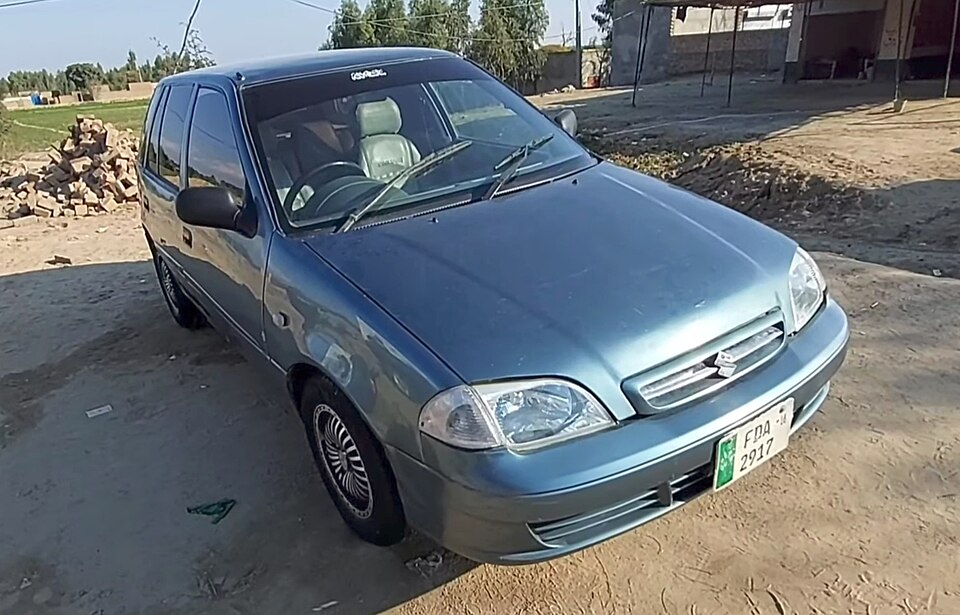
Pakistani market Suzuki Cultus. Source: Wikimedia Commons
Moving away from Justice Kiyani’s reasoning and towards that of Mst. Waqas – which we cannot know directly, and only speculate about – scrutinising the substance of the financial dispute invokes further questions arising from recent work in the anthropology of kinship and relatedness. Janet Carsten (2025) explores the implications of the everyday imaginative labour of marriage for kinship relations and wider politics. This imaginative work includes moral judgements about how much one’s marriage departs from those of parents, siblings, friends and acquaintances, comparative assessments with ideas of marriage in general, and the extent to which such departures can be tolerated. Revealingly, Carsten observes how moral judgements are contained within stuff – objects, houses, property – a point she illustrates from her Malaysian fieldwork via a woman named Rashidah, who threw her husband out of the house after discovering his affair. Rashidah details fights with her former husband over furnishings, clothing and other objects including a “Harley-Davidson motorbike for which Rashidah had paid the instalments through the marriage” (p.134).
Objects, possessions and homes may symbolise moral evaluations of an entire marriage.
The suggestive parallels between Rashidah’s Harley Davidson and Mst. Waqas’s Suzuki Cultus invite further reflections on the material aspects of people’s moral reasonings about marriage. In her work on matrimonial homes and possessions and divorce in England, Carol Smart (2007) draws out divorcing couples’ strong feelings about the division of items including joint gifts, photo albums and picture frames, DVD collections, pepper mills and cushions to argue how objects acquire symbolic significance in encapsulating entire marital relationships. She writes, “objects that were originally acquired as a joint symbolic investment in the future… all take on much more than their monetary value” (p.161), carrying memories which can shift from recollections of happy times to upsetting reminders of a relationship that has broken down, and thus symbolize bitterness where they once connoted hope. Returning intriguingly to vehicles, Smart adds that “larger and more clearly valuable possessions such as a car may also take on very symbolic meanings as the loss of the car to one partner could also mean the loss of independence, which could be highly significant at such an emotional time” (p.169). This observation is particularly suggestive for Mst. Waqas’s Suzuki Cultus, as driving crops up time and time again in Pakistani women’s narratives about “standing on one’s own two feet” after divorce – the car having a practical value in allowing women to get themselves and their children around unencumbered, but also as a token of resistance in expanding their freedom of mobility (Qureshi 2016, p.218-9).
Objects, possessions and homes may therefore symbolise moral evaluations of an entire marriage. At the same time, anthropological inquiry should not forget that these moral meanings come because property also constitutes a material asset in terms of market value; and further, property can also have instrumental value in expanding strategic life choices, as with these examples of motorbikes and cars. Arguably, property may also express more particular cultural values such as, in a South Asian context, familial honour, feminine virtue and intergenerational sacrifice. This suggested by Ghazal Zulfiqar’s (2022) work on dowry gold in Pakistan, which points to how women may draw upon their gold, alongside their labour, to contribute to the purchase and maintenance of property that benefits not only their husband and children, but also their wider affinal kin. One of Zulfiqar’s interviewees, Tahreem, described how her husband’s modest and fluctuating income as a driver meant that “We don’t even have the money for food during the summer months when he doesn’t have work. I do some sewing but it doesn’t pay much”. Pointing to her daughter’s bare ear lobes, she continued “I gave all of my gold, I even took the earrings off of my daughter… we had to contribute towards the construction of the house” (cited p.750). When asked if she gave up her gold readily, another interviewee Parveen smilingly replied “His honour is my honour. What use is the gold to me without him?” (cited p.750). These excerpts intertwine economic survival and reproductive labour with claims about honour and virtuous feminine self-sacrifice. The women talk about their possessions as standing in for their contribution to the marriage itself, conjuring strong feelings that demand acknowledgement.
[The judgement] builds on wider judicial movement towards strengthening and expanding women’s rights at the dissolution of marriage.
Going back to Carsten’s (2025) productive theorising about how material objects may become repositories of moral evaluations of marriage, she argues that gendered power is the central focus of people’s ethical reflections on marriage. In this context, marital uncertainties can sometimes be absorbed and assimilated, but sometimes, as she observes, they erupt and become the focus of explicit political discussion. This invites consideration of the wider hinterland of more ordinary quarrels which may culminate in landmark cases like Mst. Waqas’s – cases that motor wider social change. More broadly then, thinking with Carsten, we invite further reflection upon the inextricable material and moral reasonings which animate divorcing women across comparative legal regimes, the provenance of their insistence on their financial rights within marriage, how these inclinations may be supported or shot down by others in their social worlds, and the implications for wider politics.
The real-world consequences of the case are potentially great. Pakistani jurisprudence now treats marriage as a partnership in which the unpaid work a wife performs at home such as raising children, managing the household, and supporting family life, has genuine economic value that the law must recognise. As such, the judgment has contributed a significant step towards protecting women’s financial rights in relation to marriage. It builds on wider judicial movement towards strengthening and expanding women’s rights at the dissolution of marriage, and arguably signals an emerging tendency towards approaching marriage in terms of partnership. Returning to our conversation with the young lawyer in Lahore, the question now, is the extent to which the superior court’s ruling percolates down to the lower courts.
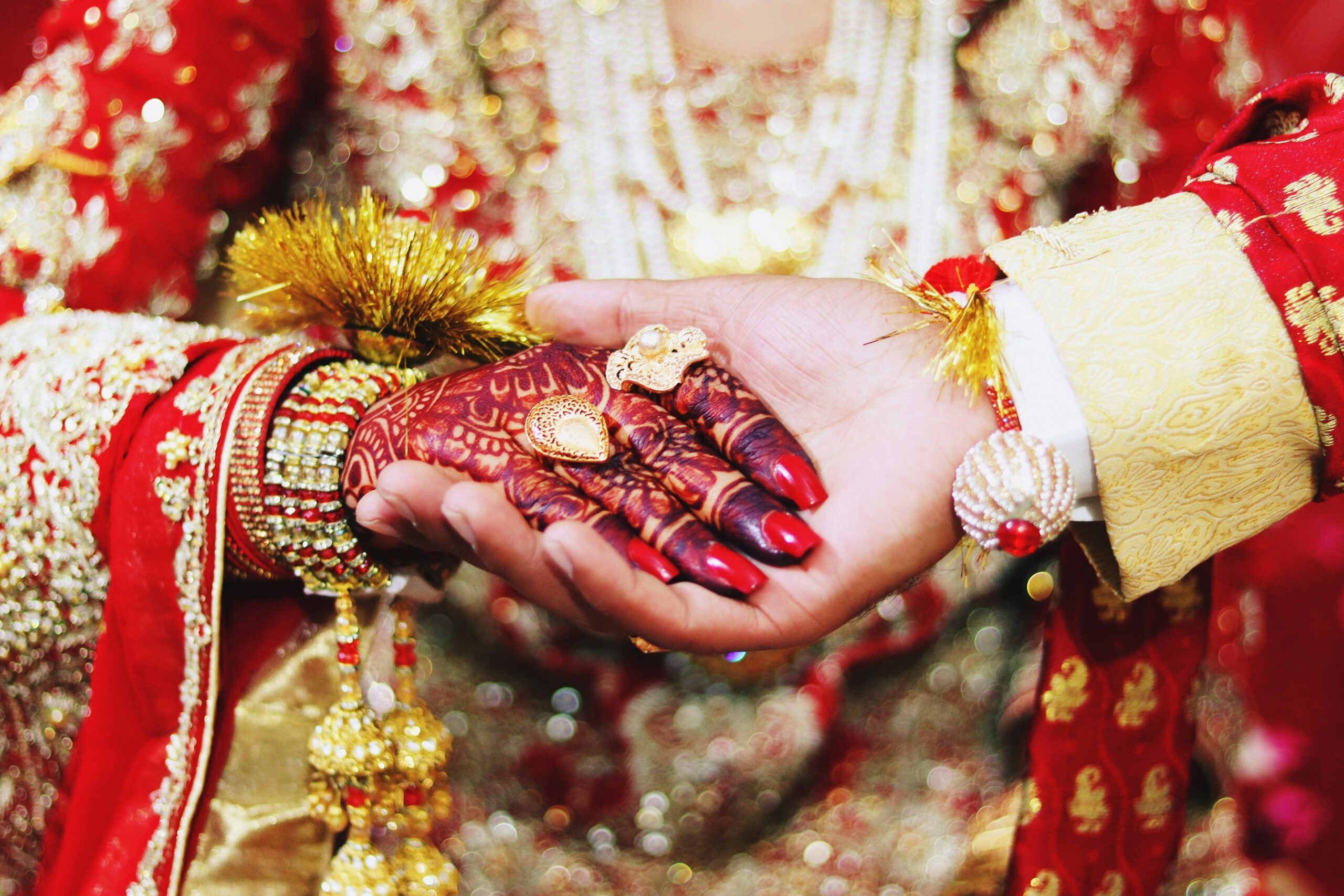
Featured image: Close-up of two people holding hands at wedding ceremony by Abuzar Xheikh, Unsplash.
Acknowledgements
The conversations with lawyers drawn upon in this essay were undertaken on 13 May 2026, during a roundtable discussion organised at the Lahore University of Management Sciences. Huge thanks to Agathe Mora and to Livia Holden for their invaluable peer reviews.
References
Abbasi, Z. (2021). Constructive trusts under Muslim family law in Pakistan: Protecting women’s rights to matrimonial property. In Asia-Pacific Trusts Law: Theory and Practice in Context (pp. 143-54). Hart Publisher.
Abbasi, Z. (2026). Partnership or subordination? Marriage, property and power under Muslim family law. 7 April.
Akhtar, R. C., & Manjoo, F. A. (2024). Matrimonial property in Islamic law. In Research Handbook on Family Property and the Law (pp. 77-91). Edward Elgar Publishing.
Bhattacharya, T. (2017). Social reproduction theory: Remapping class, recentering oppression. Pluto Press.
Carsten, J. (2025). Marriage and the moral imagination. Cambridge University Press.
Cox, N. and Federici, S. (1976). Counter-planning from the kitchen: Wages for housework, a perspective on capital and the left. New York Wages for Housework Committee.
Holden, L. (2026). Khula in Pakistan: evaluating the legal remedy of woman-initiated divorce. In S. Grover and K. Qureshi (eds). Divorce Portals: The Postdivorce in Asian Contexts (pp.47-62). Rutgers University Press.
Kotiswaran, P. (2023). Laws of social reproduction. Annual Review of Law and Social Science, 19(1), 145-164.
Kumar, V. (2015). Matrimonial property law in India: Need of the hour. Journal of the Indian Law Institute, 500-523.
Malik, M., Kamal, H., Gilani, A. H., Javaid, S., and Allawala, Z. A. (2021). Matrimonial Property: Protecting Women Financially. LUMS Law Journal, 8, 70.
Mezzadri, A., Rai, S.M., Stevano, S., Alessandrini, D., Bargawi, H., Elias, J., Hassim, S., Kesar, S., Thiyaga Lingham, J., Natile, S. and Neetha, N., Ossome, L., Raghuram, P., Tsikata, D. and Wöhl, S. (2025). Pluralizing social reproduction approaches. International Feminist Journal of Politics, 27(1), 6-33.
Qureshi, K. (2016). Marital breakdown among British Asians: conjugality, legal pluralism and new kinship. Palgrave.
Sivaramayya, B. (1999). Matrimonial property law in India. Oxford University Press.
Smart, C. (2007). Personal life. Polity.
Zulfiqar, G. M. (2022). The social relations of gold: How a gendered asset serves social reproduction and finance in Pakistan. Gender, work & organization, 29(3), 739-757.
Abstract: While Islamic family law in Pakistan has shown a jurisprudential trend towards strengthening women’s rights in divorce — including some aspects of women’s financial rights — recognition of women’s rights to matrimonial property has been uncharted territory. However, a landmark judgement from the Islamabad High Court in March 2026, which drew from Islamic legal thought, English law and international human rights instruments, decided for the first time that wives have a right to matrimonial property upon divorce. Furthermore, the judge argued that this was not only because of a wife’s monetary contribution via her paid labour, but because reproductive labour too constitutes inherent participation in wealth accumulation. This essay draws out the significance of the judgement in critical social science terms.