
Some anthropologists describe. Others stay. Paul Farmer’s (2005) Pathologies of Power, Nancy Scheper-Hughes’ (1992) Death Without Weeping, João Biehl’s (2013) Vita — these are works that outlasted their own writing. What draws me to these three is not that they steadied the ground between anthropology and advocacy but that their work shows that no such ground exists — it only shifts beneath you. Farmer traded the lecture hall for the clinic. Scheper-Hughes faced community backlash that followed her out of the field. Biehl was criticized for making poverty beautiful. I am drawn to them not despite this but because of it. I have long agreed with what they argued. I’ve found, though, that agreement is the easy part. Here, I think through what that agreement looks like from the inside: from the hesitations and the costs to the point where engagement becomes non-negotiable. At the end, I return to Clifford Geertz’ reading of cultures, but tilted from the angle he intended.
I do not say this to establish credentials or to call for solidarity: I am an Igorot of Kankana-ey and Bontok descent, from the Cordillera. I articulate it because the land questions I have spent my early “career” studying are not scholarly ones alone. They are questions that emerge in the stillness between elders and in the manner that particular words are chosen prudently and others are not said at all. The ethical prescriptions of academia are not the sole ones I answer to. I am bound by community accountabilities that were taught to me nowhere near a seminar room, that predate my degree… and will definitely outlast it. It is from this ground (ongoing, claimed despite its complications) that I want to wrestle with what doing engaged anthropology asks of us.
A circumstantial activist is one who becomes so because of surrounding circumstances, not merely when it is convenient for the ethnographic pursuit.
In the Philippines, the forms of anthropological engagement identified in the literature — sharing, teaching, social critique, collaboration, advocacy, and activism (Low and Merry 2010) — have always exceeded the academic. Anthropology arrived here at the turn of the twentieth century under U.S. colonial authority, already entangled in the project of knowing peoples in order to govern them. Fieldwork in the Philippines today navigates security concerns, militarization, and the contested terms of consent under new legal frameworks (Mangahas and Zayas 2018). For those of us who do this work from within these communities, these are not conditions we observe from a distance. They are conditions we live. In my experience, whether to engage was settled way before the fieldwork. The harder questions are how, with whom, at what expense, and even for how long. This is also where I find myself somewhat in agreement with George Marcus (1998), who writes that an ethnographer working across multiple sites becomes a circumstantial activist, renegotiating identities as they learn more about the world system — though one distinction matters to me here: a circumstantial activist is one who becomes so because of surrounding circumstances, not merely when it is convenient for the ethnographic pursuit. The field taught me that distinction in a conversation I was unprepared for.
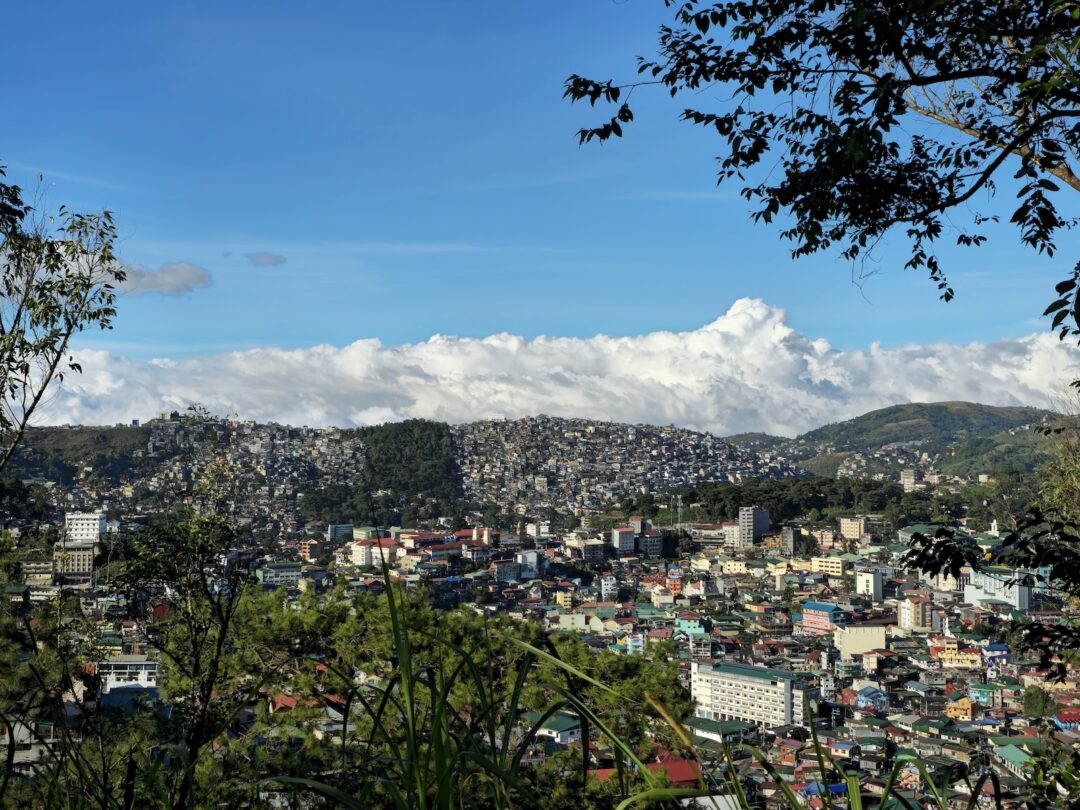
Figure 1: Baguio City, where the cold does not excuse you from difficult questions. Photo by the autor.
I once sat across an Ibaloy-Igorot man over coffee in Baguio City, where the cold does not excuse you from difficult questions. I will call him Jun here, though that is not his name. I asked him why he and other land “claimants” chose to pursue their collective rights through state law rather than by invoking customary law. I had my phone recorder. I had my questions. I thought I was the one doing the asking. He answered me plainly: because he had been told, in too many ways and for too long, that what he knew and who he was did not count — and he disagreed. Then he looked at me and asked, “if state law is intended to protect, why does it strip Indigenous peoples of their rights?” I had no answer. Jun probably knew that before he asked. I just sat there with my recorder running, notebook open, and said nothing. Then we carried on with our conversation. I think that silence was the truest thing I did that day.
Sharing Indigenous identity with the people I work with does not dissolve the asymmetries of the research relationship.
Being Igorot did not protect me from that silence. Sharing Indigenous identity with the people I work with does not dissolve the asymmetries of the research relationship. It makes them more complicated. That much I know. The rest, I am still figuring out. Shortly after completing my PhD, I was invited to sit on a panel evaluating an ethnography that an Indigenous community authored to support their legal claim to ancestral lands. I was there because I had credentials. I was also there because I am Igorot (as if being Igorot settled the question of authority). The community members were in the room. They were deferential toward the panel. That deference made me unspeakably ashamed, and then some. “Ashamed” does not capture what I felt, and I have yet to find the proper word that does. These were people whose knowledges of that land, those histories, those lives, were the very things being evaluated, and they were looking to us to tell them whether it was enough. The session was being recorded as it was conducted in a hybrid set-up . I asked for it to be put on record that the members of the expert panel were not experts on that community’s culture. They were. I do not know if it changed anything, but I know it did not change the structure of the room, or who had the authority to be there… or why. Being Indigenous did not exempt me from that structure. Sometimes it made it worse, because I understood, from the inside, the toll of sitting there and waiting for our verdict on their own stories. I share ancestry with some communities and with others, I am as much an outsider as any non-indigenous researcher. What shifts is not the power differential, but the nature of the expectations and the accountability I cannot always account for.
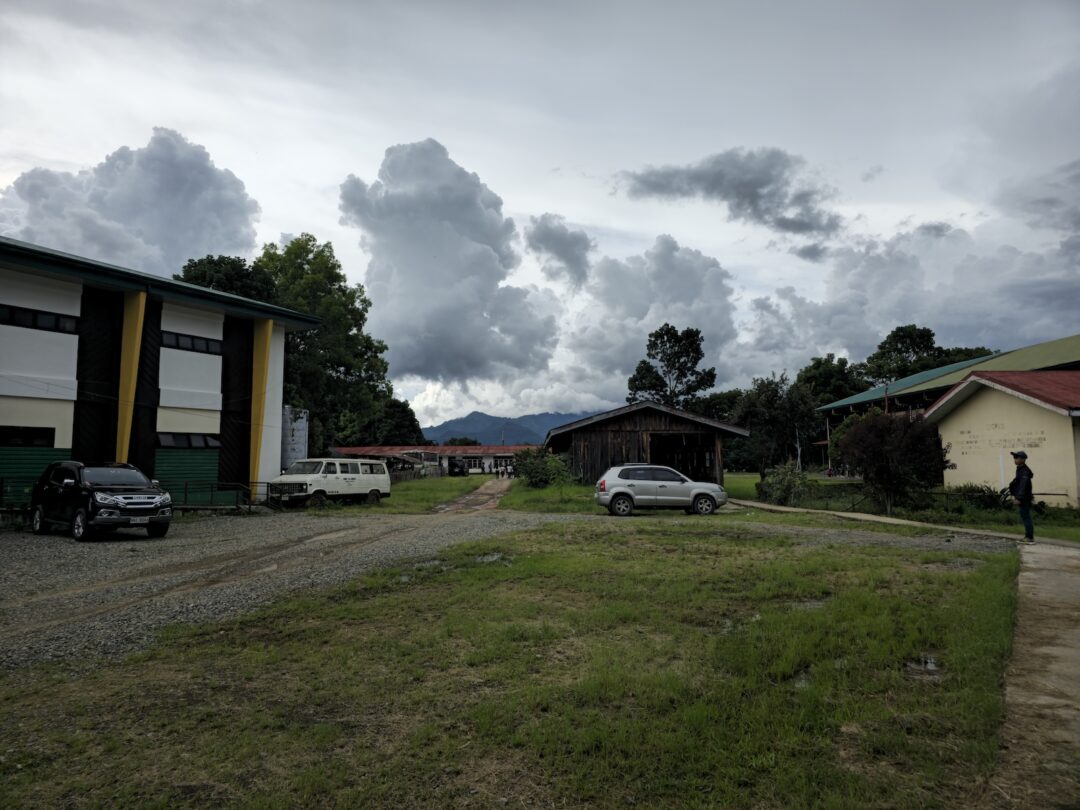
Figure 2: Outside the hall where their own story was put on trial. Photo by the autor.
I bring that chafing of accountability into writing. During a public scholarship training I undertook with SAPIENS, a publication dedicated to public anthropology, I had thick fieldnotes from work in the Northern Philippines, from a community facing the impending construction of a dam. What that dam project did before a single stone was laid was fracture the community from within. Neighbors who had once cared for each other’s children stopped speaking. The rupture was material as it was social and irreversible either way. Underneath it were threats, state intervention, bribery, and staged consent. SAPIENS asked me to translate those fieldnotes into a public-facing piece of at most 2,000 words. I tried at a desk. I tried in cafes. Some mornings, I would lie awake for almost an hour with the project sitting on my chest before I would rise to do my daily chores, which mostly meant feeding seventeen cats who did not care about ethnographic dilemmas. It took me almost a year to finish. And this was not because I did not know what to write, but because I knew too much. I had intimate knowledge of transactions that existed outside the record. Writing the truth risked endangering the people who had trusted me with it. Not writing it seemed like another form of violence. Moving through that piece put flesh on something I have theorized but not yet inhabited —James Clifford’s (1983) question of who gets to study or talk about whom and by what authority. Communities possess that authority, too, and they exercise it through refusal. They refused to speak, refused to be anonymized, refused to have their words thinned out by paraphrase. In that community divided by a dam, some chose silence. That silence was ironically not a gap in my fieldnotes. It was a position I had to decide either to protect or override. I chose to protect it. Was it the right call? I am not sure.
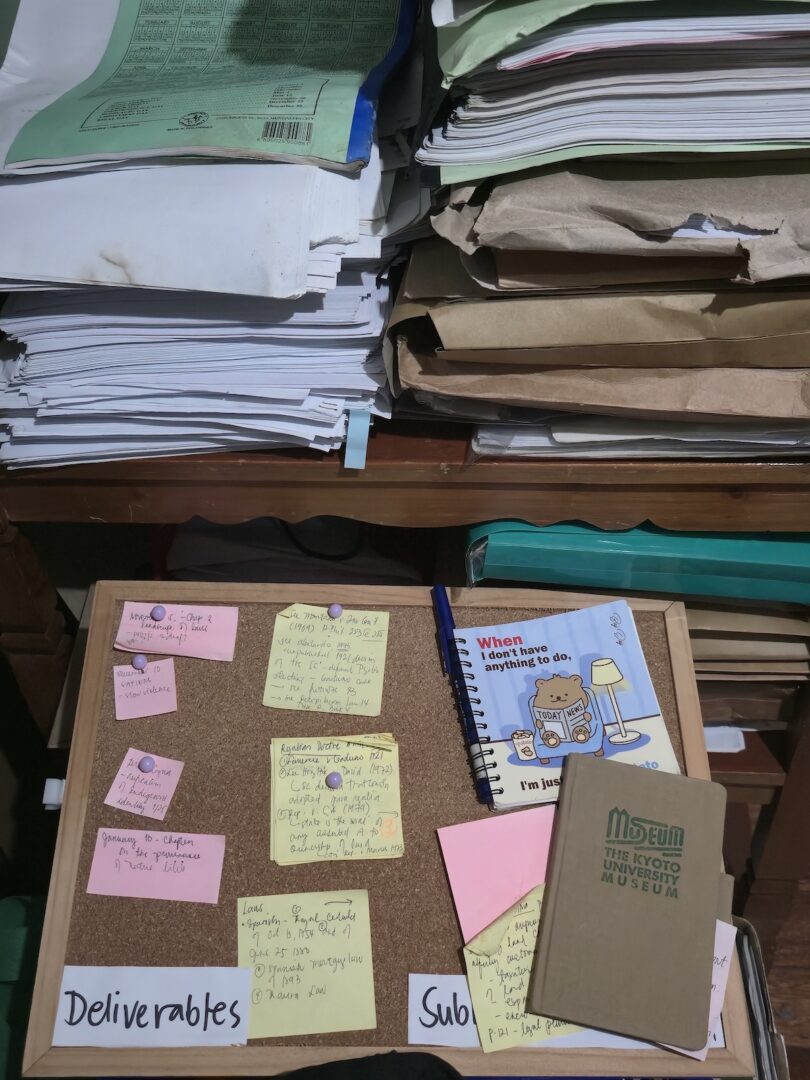
Figure 3: Fieldnotes are not data. They are accountabilities.
Scheper-Hughes (1992) argues that involvement is near-inevitable, and that what cannot be compromised in that involvement is your accountability to the people who gave you personal access to their lives. This is not a professional stance I adopt only when I enter the field. It is older than my vocabulary for it, which is also why I lose sleep over whether consent given over coffee a decade ago still stands today.
There was an elder woman (I will call her Mary) whose family had been fighting the government for as long as she could remember, in Baguio City, in a territory declared a military and forest reservation despite everyone knowing whose land it had always been. I asked her if she would consider voluntary relocation in exchange for just compensation. She did not hesitate. She told me that just or not, compensation is not the answer when dispossession is the tradeoff. I wrote that down. That statement accompanied me all the years I’ve been working on land issues. I lost contact with her just before the pandemic when I relocated to Manila for a consultancy, and then COVID happened, and the distance became permanent, like how absences do (you notice only after). Last week, a young undergraduate consulted me about her thesis. As she described her research area, I recognized the places, the disputes, the families, and the corollary Indigenous rights issues. I asked her if she knew the elder woman. She did. They were neighbors. I showed her photos from my visits. She told me the woman was now bedridden. I sat with grief and, beside it, something adjacent to guilt — guilt that comes without invitation and leaves on its own schedule. But then she said that until Mary was bedridden, the woman not once stopped fighting. I do not know why, but that made me cry.
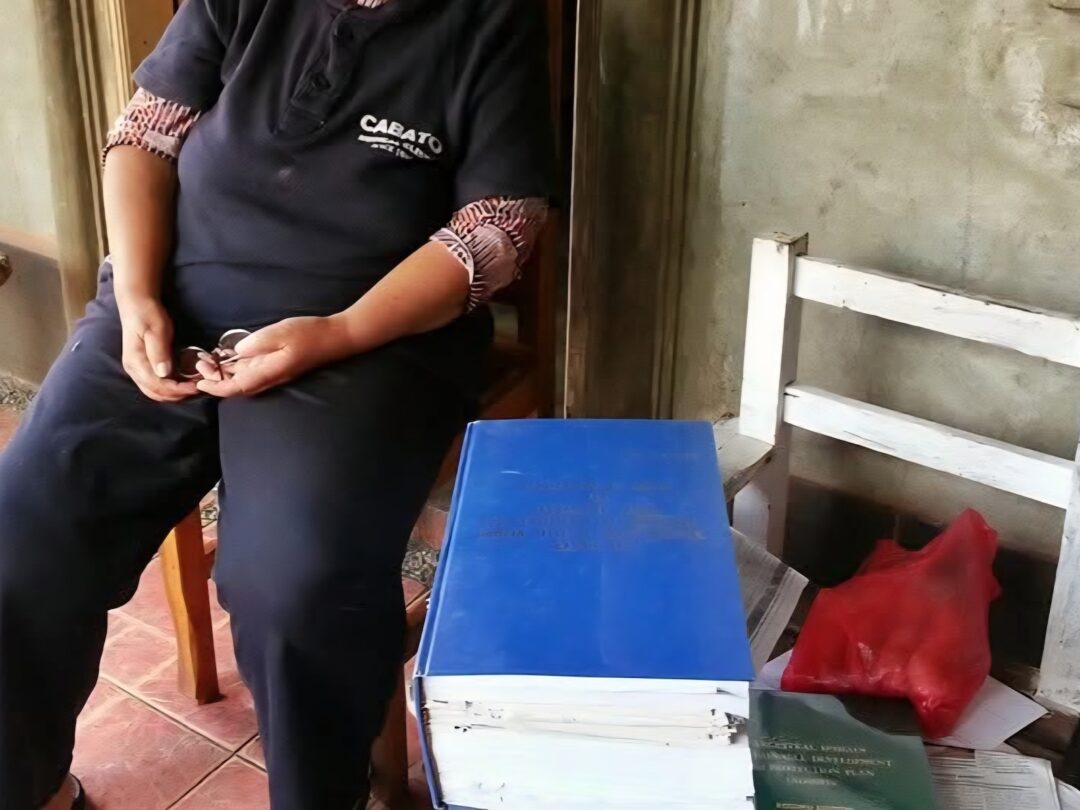
Figure 4: I thought I was the one doing the asking. Photo by the autor.
Moments like these are what engaged anthropology costs. Many times, we are afflicted with the Messianic complex of wanting to save the world for all its ills and remaining glories. Especially when confronted with research projects that evoke make-or-break choices, we usually choose the front seat. In engaged anthropology, we should be ready to take a back seat when the circumstances necessitate it, as in when the communities we engage with decide to take the lead and ask us to be advocacy partners instead. Geertz (1973) wrote that culture is an ensemble of texts that the anthropologist strains to read over the shoulders of those to whom they properly belong. I agree, but only partially. Not over their shoulders, at least. I try to stand before them on level ground, looking into their eyes and not above them, and certainly not breathing down their necks.
Accountability does not begin and end with what you publish. The responsibility burrows into how you write, what you refuse to reduce, what you visibilize and what you withhold, and into if you stay unsettled by it.
Up to this day, I have no clear plan about what to do with the pieces of their minds I have had stored with me — Jun’s, Mary’s, the community members in that panel room, and others whose names I have not written here. What I have come to understand unhurriedly is that being handed someone’s story is not the same as being authorized to tell it on my own terms. The story stays with you, and so does the responsibility. Accountability does not begin and end with what you publish. The responsibility burrows into how you write, what you refuse to reduce, what you visibilize and what you withhold, and into if you stay unsettled by it. The trouble with being a storyteller for others is that the stories do not wait for you to be ready. You cannot choose the form they take or when they come back to find you. It can be in a conversation with an undergraduate, in a photograph you took years ago, in the middle of an essay you thought was about something else. So I have not published recklessly. I have not forgotten. I have hesitated and refused, as much as I could, to condense what they shared into material for someone else’s conclusions, including my own. Publishing is not the only way to hold a story with care. But you do have to keep being accountable to the people it came from.
Mary fought until her body refused. I owe her, at minimum, the dignity of the question. I don’t always have the answer. Mary didn’t wait for one either. She just kept going.
Featured image: Baguio City, Philippines. Photo by the autor.
Note
There is another entry point into this work in this scrollytelling narrative.
References
Biehl, João. 2013. Vita: Life in a Zone of Social Abandonment. Berkeley: University of California Press.
Clifford, James. 1983. “On Ethnographic Authority.” Representations 2 (Spring): 118–146.
Farmer, Paul. 2005. Pathologies of Power: Health, Human Rights, and the New War on the Poor. Berkeley: University of California Press.
Geertz, Clifford. 1973. The Interpretation of Cultures: Selected Essays. New York: Basic Books.
Low, Setha M., and Sally E. Merry. 2010. “Engaged Anthropology: Diversity and Dilemmas: An Introduction to Supplement 2.” Current Anthropology 51, no. S2 (October): S203–S226.
Mangahas, Maria F., and Cynthia Zayas. 2018. “Current challenges to Filipino anthropology and its practice.” Aghamtao 26: 101–120.
Scheper-Hughes, Nancy. 1992. Death Without Weeping: The Violence of Everyday Life in Brazil. Berkeley: University of California Press.
Abstract: What do we owe the people who hand us their stories? I am Indigenous, and much of my work on land and Indigenous rights takes place among communities I belong to. I am working out, still, what that closeness means. A few encounters from the field have taught me what shared identity does and does not change. It has not spared me the imbalances of research. If anything, it has made them more complicated. But it has never changed what I owe the people I work with. And that is what engaged anthropology asks of us: an accountability that does not stop at publication, and that can take the form of silence or refusal.