

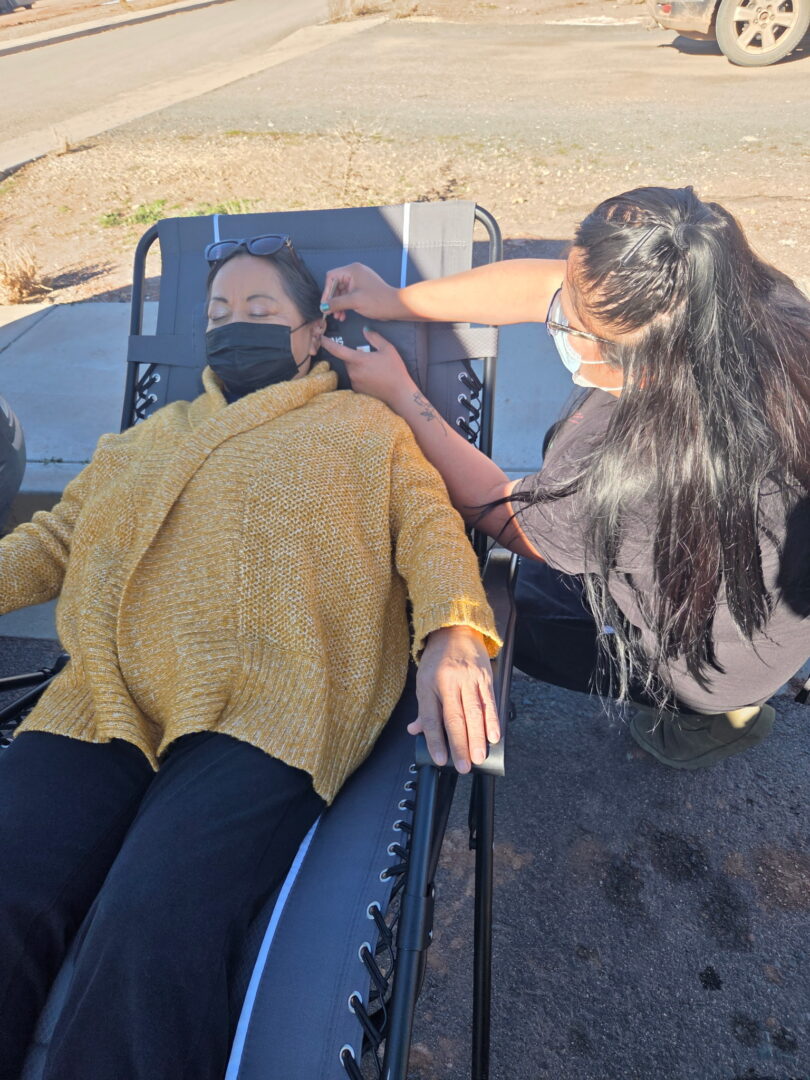
In a room at a juvenile detention center an Auricular Acupuncture Technician (AAT) carefully places acupuncture seeds in a young person’s ears. This, she tells them, can help with anxiety, trauma, and addiction. Her job is meaningful, she says, because she can see healing work. She remembers her own time in detention as a young, self-described angry teen, and wonders what it would have been like to have acupuncture. “Maybe it would have chilled out my flight or fight. Maybe it would have chilled out my trauma.” She now tells young people, ‘it’s gonna be all right, you know? I was here, too.’ Her care is free and she provides it as part of a mobile program in the US southwest.
This story is one of many we, the authors, heard while working on a storytelling project to create public-facing information on mobile acupuncture. While listening to people reflect on acupuncture. we found a confluence between community acupuncture and social science research and practice. It is in this space we find hope.
We are committed to projects designed for community care and equity. We are an anthropologist specializing in medical anthropology, storytelling, and relational research (ljh) and an acupuncturist running a community clinic and mobile acupuncture program (Nox). We are neurodivergent queer parents who came from post-industrial cities and now live at the base of the Arizona mountains where we can feel out of place. We are especially distressed by the direction of the United States in 2026 as we watch safety nets crumble and disappear, but we find inspiration in challenging unequal systems, and we find hope in community care. Here we present a discussion of how acupuncture and social science can carry the practices of connection that help us to find meaning in turmoil. and provide paths toward connection and care.
Auricular Acupuncture
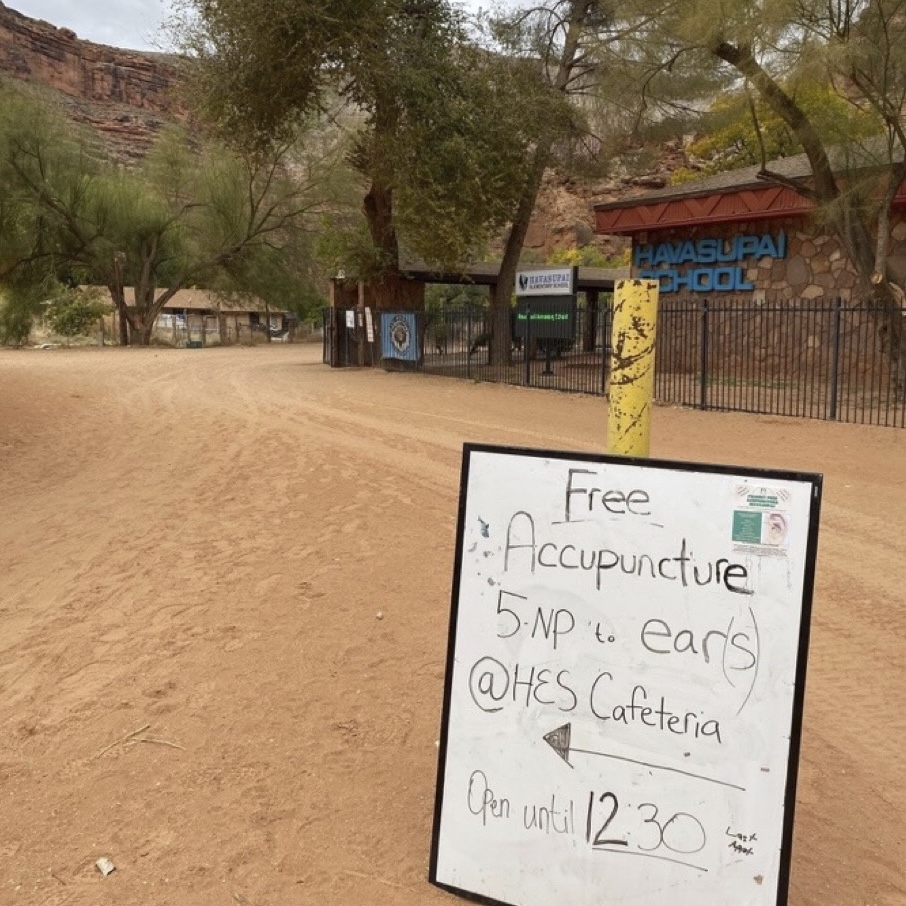
An Auricular Acupuncture Technician providing care for people in juvenile detention after having been there herself is an example of how community acupuncture works. People with lived experience train and provide care for their communities in ways that reduce the stresses of a usual healthcare setting. This mobile AcuDetox program is part of Stuck Community Acupuncture in northern Arizona, a program using a justice model. Overseen by a fully licensed acupuncturist, community members learn an evidenced-based protocol they use to provide no-cost care throughout the region. AATs, paid fair wages, travel to partnering sites including locations for justice involved people, shelter services, recovery houses, domestic violence shelters, and rural locations on tribal lands.
Rapid Assessment and Relational Research
The underlying justice aspect of mobile acupuncture may sound familiar to those who practice research and implementation for community-centered health social science. Rapid Assessment, Response and Evaluation (RARE) is one of many models that we use to create practical research designs that incorporate community experts in programs that can result in community care (see for example Trotter et al., 2001). In RARE and similar models, seasoned professional researchers integrate people who are part of communities into research and practice in different ways that honor people’s expertise over their own lives and communities.
A doctor of acupuncture with an abundance of education and experience training people for a form of acupuncture that is accessible without years of schooling, mirrors our practice in rapid assessment where trained researchers with education and experience provide instruments and foundations for community expert practices. Both approaches highlight flexibility of leads learning from and adapting to community responses, desires, and needs through ongoing processes of iterative improvement. In these ways these models share core principles and outcomes.
AcuDetox
AcuDetox is an evidence-based healing modality shown to decrease cravings and regulate nervous systems through harm reduction. 5NP is an evidence-based auricular (ear) acupuncture treatment that utilizes 5 acupuncture points in the ear. It includes the Shen Men, Sympathetic, Kidney, Liver and Lung points through specific Eastern and Western applications. In Eastern medicine the Shen Men point calms the mind (shen) and supports sleep. Sympathetic regulates the sympathetic nervous system and interrupts the “fight or fight” response. Kidney alleviates fear, grounds and strengthens the will and detoxifies the body. Liver moves anger and irritability through the body and supports the liver’s detoxification functions and lung supports clearing lungs and breathing while ameliorating sadness and grief. From the vantage point of allopathic medicine, the protocol is partially effective due to mechanisms of auricular acupuncture that support and stimulate vagal regulation through the auricular branch of the vagus nerve. Acupuncture needles stimulate the activity of the cardiovascular, respiratory and gastrointestinal systems and multiple studies have indicated vagal tone supported by auricular acupuncture (He et al., 2012).
Community acupuncture organizations like The People’s Organization of Community Acupuncture (POCA) integrate AcuDetox to “protests against the exclusionary logics of biomedical hegemony,” described by Morrissey & Hagman (2020) in a chapter describing their anthropology of community acupuncture with the clever subheading “anthropology gets poked.” AcuDetox grew from programs like the barefoot doctors, high school students trained to provide basic health care in rural areas including allopathic medicine and acupuncture techniques (Xu & Hu, 2017). The program has shown varying success with global health critiques of state-sponsored care, including reliance on allopathic medicine over traditional healing modalities (Fang 2022). These and other community-led health initiatives are not immune to debates in global health surrounding medicine and power. Yet the example of lay people bringing medicine to rural areas generates new ideas for other accessible healing modalities.
Social uprisings in the United States in the 1960s brought AcuDetox to the Bronx through Dr. Mutulu Shakur and the Young Lords and Black Panthers who turned their attention to the systemic violence of drug availability and addiction in communities of color. These activists took over a hospital and implemented community care including auricular acupuncture on the streets in surrounding areas (Sunni-Ali 2022; Meng 2021; Donovan 2020). It is in this spirit of social revolt that AcuDetox becomes a critical tool.
A sign for free acupuncture appears in front of a Havasupai school. Photo by Authors.
The Practice of Care and Relational Research
There is a connection between what community acupuncturists refer to as trauma informed care, and what we might consider to be relational and community care. Nox speaks of their practice in ways that resonate with relational social science through breaking down patient-provider and researcher-researched relationships in practical, everyday ways. We draw on the work of Indigenous, feminist, and Black scholars who frame research and practice as care in relationships to one another, challenging outdated extractive models of scientific inquiry. Examples include “fugitive anthropology” (Berry et al. 2017) and forms of research that include accompaniment (Abrego 2024), and relational care (TallBear 2014).
We work together to figure out how our knowledge, some of us experts in theory, research, and analysis and others in their own lived experience–or both, might become practically useful.
Relational models of research incorporate the concept that researchers are not in positions of knowledge above research participants, but that we are in relationship with one another (see for example Tynan 2021). A single concrete example (among many) might be a project that is youth-engaged such that a researcher works with youth to lead a project, providing training and then collaborating with young people as they modify and develop research practices, make decisions about the goals and questions of the project, learn how to conduct research including in-depth conversations about ethical obligations, and reflect on and analyze data together. The group decides what they might do with those outcomes. In these ways, participating youth lead through personal experiences and knowledge as insiders while a researcher or researchers share skills, knowledge, and frameworks for the project itself. Instead of extracting knowledge from people as detached experts, people operate in leadership roles as experts in their lives. We work together to figure out how our knowledge, some of us experts in theory, research, and analysis and others in their own lived experience–or both, might become practically useful.
We do this work with the knowledge that we have different experiences, precarities, and privileges, mindfully designing projects to integrate differences through listening and analyzing data together via reflection and connections to the embodied experiences of communities with whom we work. We challenge policies that reward only some forms of knowledge (like implementing fair pay and reciprocity and considering personal relationships through project structures) to make knowledge together rather than taking information and reporting out in researcher-exclusive ways. These same principles carry into community acupuncture through different forms of care.
Research and consent as toolkits of care
Healthcare in the United States is increasingly owned and run by private interests. Being a patient often means arriving at a sterile, corporate building, filling out paperwork, being shuffled from one place to the other, enduring tests without being told what they are, not being listened to, being rushed through appointments, and facing exorbitant bills. In contrast, providers in Mobile AcuDetox practice care. Community acupuncturists ask people receiving treatments questions and observe and listen to body language and communication to guide their practice. They describe the protocol, ask participants if they would like low lights, and let them know it is acceptable for them to fall asleep or cry. They also approach participants gently and ask prior to placing a pin. The protocol is also no-cost, meaning that no participant is required to share why they are there, any medical diagnoses, insurance coverage documentation, or anything at all.
Consent can be considered a ritual that marks the beginning of an out-of-the-ordinary conversation during which time we state and demonstrate through body language and voice, that we care for the person and will be careful to hold what they share with respect.
Research consent forms are similar when they are designed and implemented through a relational process. For example, instead of going through a consent form at the beginning of an interview as though it is a sterile and bureaucratic necessity, researchers who think through relational care can view the beginning of an interview as a time to listen and build trust. We tell people exactly what we will do with the information they provide, help to them to feel comfortable, and ensure that they want to participate. We also let them know that they can stop the interview at any time or let us know later if they would like us to remove their information from the study when possible. Consent can be considered a ritual that marks the beginning of an out-of-the-ordinary conversation during which time we state and demonstrate through body language and voice, that we care for the person and will be careful to hold what they share with respect. Researchers communicate that we will do our best to honor their words in whatever ways that we can. Then we begin the interview, group, or other research activity, facilitating as people share their thoughts and perceptions in meaningful ways.
Many of us also use and train a strengths-based approach of listening to people and bringing forward hopeful aspects of their lives. This is not a rose-colored-glasses idea but one that facilitates sometimes painful discussions and then guides them back to a place of trust and safety at the conclusion of the interview. Researchers also experience discomfort during these interviews, though the care that occur through our connections helps us too (Thompson-Campitor 2025).
Hope
When we reflect on motivations for choosing to study social science and acupuncture, we share a committment to the underlying core of justice. Learning and returning to the justice movements that have come before and finding opportunities for lively transformation in practices of care bring both of us renewed meaning.
The healing aspect of acupuncture in the science-backed changes that occur in the body and in the healing that comes with being cared for and heard. This is true, too, in our practices of social science. They are woven into opportunities for healing, connection, and justice that can be individual, in listening and caring for someone, and through challenging larger systems and policy change. Healing and hope are necessary for participants in our research and in our acupuncture clinics, and us as researchers and practitioners of our fields.
Featured image: An Auricular Acupuncture Technician provides a no-cost treatment on tribal lands. Photo by authors.
The authors gratefully acknowledge funding from the Arizona Community Foundation.
References
Abrego, L. J. 2024. Research as Accompaniment: Reflections on Objectivity, Ethics, and Emotions. In: Chua L. J., Massoud M. F., eds. Out of Place: Fieldwork and Positionality in Law and Society. Cambridge Studies in Law and Society. Cambridge University Press, 36–56.
Berry, M. J., Argüelles, C. C., Cordis, S., Ihmous, S., Estrada, E. V. 2017. Toward a Fugitive Anthropology: Gender, Race, and Violence in the Field. Cultural Anthropology, 32(4), 537–565.
Donovan, M. (director) 2020, Dope is Death. Documentary Film, EyeSteel Film, Montreal, Canada.
Fang, X. 2022. Communist Medicine: The emergence of TCM and barefoot doctors, leading to contemporary medical markets. In: Lo, V., Stanley-Baker, M., Yang, D., eds. Routledge Handbook of Chinese Medicine. London: Routledge.
Meng, E., 2021. Use of acupuncture by 1970s revolutionaries of color: The south Bronx “toolkit care” concept. American Journal of Public Health, 111(5), 896–906.
Morrissey, S. Hagman, O. 2020. Social Justice, Trauma-Informed Care, and “Liberation Acupuncture”: Exploring the Activism of the Peoples Organization of Community Acupuncture. In: Willow, A. J. & Yotebieng, K. A., eds., Anthropology of Activism.
Page, C. C. and Woodland, E. 2023. Healing Justice Lineages: Dreaming at the Crossroads of Liberation, Collective Care, and Safety. Berkeley, California: North Atlantic Books. (Huichin, unceded Ohlone Land)
Sunni-Ali, A. 2022. Dr. Mutulu Shakur and the Holistic Healing of Acupuncture and Political Education: A Review of Dope is Death. Souls, 23(1–2), 166–178.
TallBear, K. 2014. Standing with and speaking as faith: A feminist-indigenous approach to inquiry [Research note]. Journal of Research Practice, 10(2), Article N17.
Thompson-Campitor, C. 2026. “Advocacy is to Stand with Someone in Suffering”: What Lyme Disease Advocacy Has Taught Me About Humility in Practice. Practicing Anthropology, 48 (1), 1–7.
Trotter, R. T., Needle, R. H., Goosby, E., Bates, C., & Singer, M. 2001. A Methodological Model for Rapid Assessment, Response, and Evaluation: The RARE Program in Public Health. Field Methods, 13(2), 137–159.
Abstract: Through storytelling for health, the authors provide examples of different practices designed for justice and connection, community acupuncture and ethnographically informed research. Mobile acupuncture brings people with lived experience into roles of healthcare through training as auricular acupuncture technicians who offer no cost, accessible treatments that can regulate emotions and cravings. Community engaged research implements similar strategies through honoring the knowledge and experience of insiders as experts. These forms of justice provide relationship-based connections during politically precarious times.




What stays with me is the parallel between the AAT in juvenile detention saying “I was here, too” and your later description of consent as a ritual of care. In both cases, the method seems to work partly because expertise is not treated as something that only travels from professional to patient or researcher to participant. I wonder how you document that relational part without flattening it into another checklist for funders or institutions.