

Vera Egbers, Christa Kamleithner, Özge Sezer and Alexandra Skedzuhn-Safir. 2024. Architectures of Colonialism: Constructed Histories, Conflicting Memories. Berlin: De Gruyter Brill.
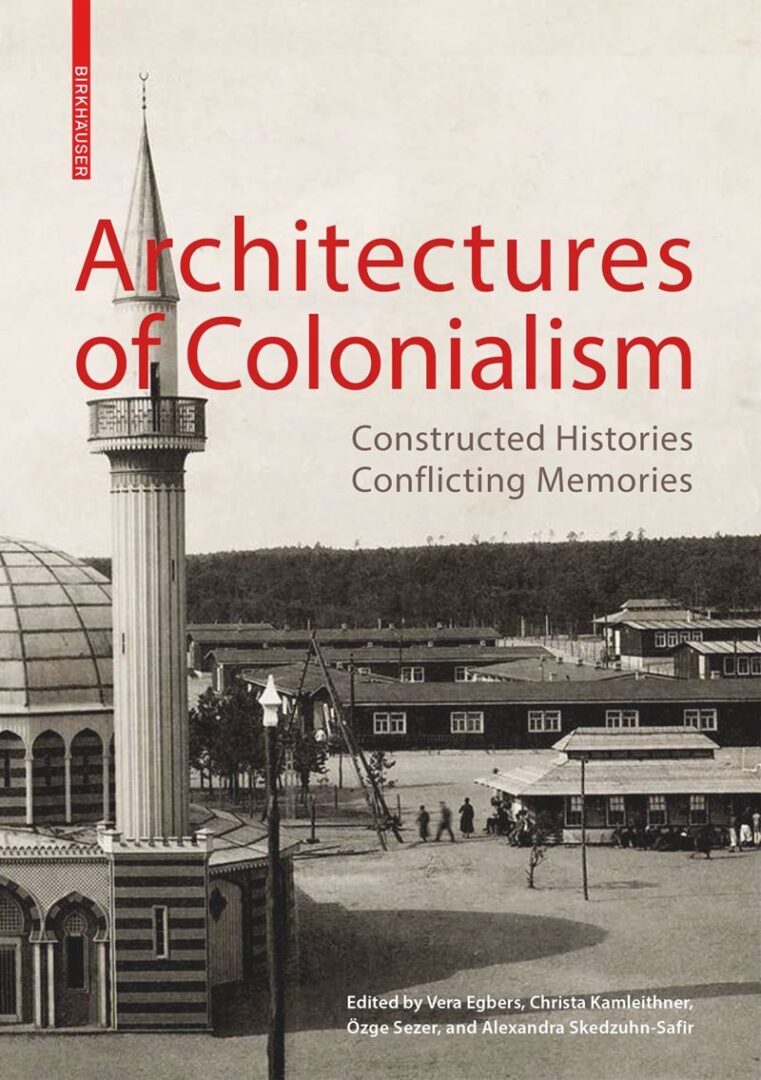
Against the backdrop of Black Lives Matter protests and the debate around decolonisation, Architectures of Colonialism: Constructed Histories, Conflicting Memories follows the colonial traces in the built environments of former colonies and metropoles. Its central axis of analysis is colonial power, built heritage, built environment, and memory. The edited volume was published after an international conference with the same title at Brandenburg University of Technology Cottbus-Senftenberg, Germany, in 2021. Following an inauguration by Itohan Osayimwese, the publication is organised around two thematic areas: “Archives and histories” and “Heritage and Memories”. The scholarly work targets both professional and academic, as well as non-academic and activist audiences; it succeeds in clarifying theoretical terminology and background in a concise, straightforward way for non-academics.
Itohan Osayimwese sets the stage and tone for the whole book with her profound work, which begins with a brief genealogy of the discipline of postcolonial architectural history. In her nuanced analysis, she guides readers, regardless of their prior knowledge, through a delicate discussion of postcolonialism and the decolonial turn in architectural history, and their different tendencies toward one another. Though postcolonial studies pay particular attention to positionality, Osayimwese shows that many of the female non-European/non-American scholars whose work shaped the field of postcolonial architectural history were rendered invisible. Her contribution strengthens the dialogue between postcolonial and decolonial approaches within architectural history.
Rather than regarding architecture as a neutral backstage for daily life, this book presents it as inseparable from power relations, colonial domination, postcolonial negotiation, and the resistance of subaltern groups and objects.
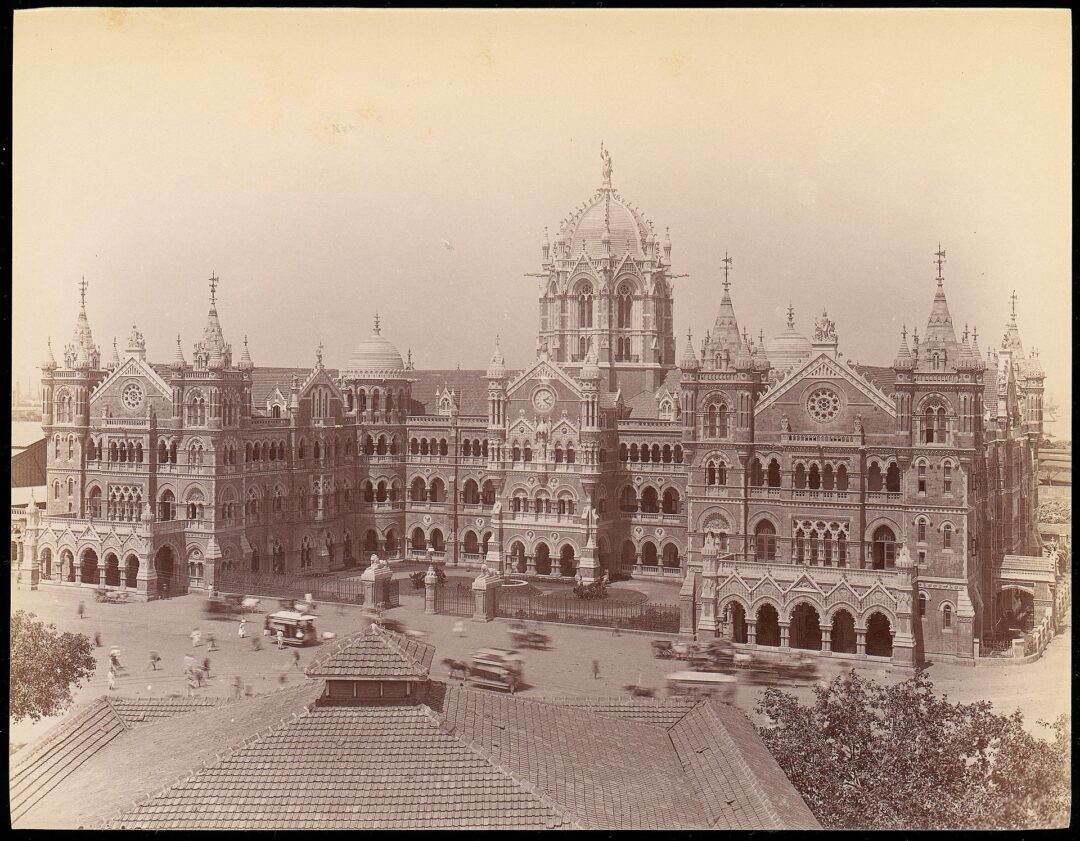
Understanding postcolonialism and decolonialism as challenging the simplifying, Eurocentric architectural historiography of colonial pasts and its process of knowledge production (Osayimwese, p. 27) means interrogating inherited violence, racial hierarchy, and colonial order, as well as economic exploitation and white supremacy, in relation to colonised inferiority. Most of the contributions investigate the political dimension of colonial architecture in an interdisciplinary landscape, including history, archaeology, architectural history, and heritage studies. The chapters take us on a journey featuring great geographical diversity: from the Western shores of India (Mumbai and Goa) to the east African coasts of Tanzania and Kenya (Mombasa and Zanzibar), Mozambique (Maputo) reaching South Africa (in Pretoria and Cape Town), passing the western parts of Africa in Angola and Cameroon to North Africa in Marocco (Ceuta). References to architecture and monuments in London, Berlin, and other colonial metropolises are made when needed. Some chapters engage with cases in the Global North, from the mining town of Malmberget in Sweden to German archives, museums, and colonial sites, as well as the toppling of monuments in the United Kingdom and the USA. The examined objects are of different nature and scale, e.g., photos in the Archive (Cornelia Escher), names of streets (Anna Yeboah), buildings like Victoria Terminus in Bombay (Shraddha Bhatawadekar), a diary book and clock towers (Zulfikar Hirji), or mining towns like Dundo (Beatriz Serrazina). These case studies differ in how they treat and interact with colonial sites and address colonial heritage across various historical phases and under several colonial powers, all within the context of the conducted research, the entanglement of global history, and the urgent questions of inequality of dominant Eurocentric discourses when articulating colonial legacies.
Rather than regarding architecture as a neutral backstage for daily life, this book presents it as inseparable from power relations, colonial domination, postcolonial negotiation, and the resistance of subaltern groups and objects. In doing so, the authors and editors deconstruct the alleged neutrality of several Western disciplines, such as history and (built) heritage conservation, as well as related concepts such as identity and memory. “[H]eritage conservation is a political act” (p. 9), the editors affirm, and Johanna Blokker pleads for understanding the negotiation processes of valorising built heritage as “political processes” (p. 235). Whereas Elizabeth Rankin and Rolf Michael Schneider conclude that “historical Truth” (p. 111) is a construction, Lisandra Franco de Mendonça highlights the relationality between built heritage, performing identity, and political legitimacy (p. 156). Reinhard Bernbeck states that “[m]emory is always political” (p. 269). This hints to a recurring theme throughout the book: decolonial architectural history is not only a scholarly endeavor, but also a political project.
In contrast to what the right-wing parties in Germany and Western Europe try to emphasise – that colonial history is a phase that ended in history – this collection shows that colonialism is not a historical debate, but rather still actively shapes our reality and society everyday.
The volume claims to navigate or at least engage with the task of decolonial theorisation, in which the assumption of culture as a “closed entity” – and with it the binary of “coloniser-colonised” and “centre-periphery” – is rejected, while acknowledging the risk of “losing sight of undeniable asymmetries” (p. 10) in power, which still affect people in former colonies. Implementing an approach informed by postcolonial and decolonial theory, the contributions stress how unequal power dynamics and violence shape colonial architectures, their legacies, and our societies in the present. The authors’ research is conducted not only through European-based archives, but also via oral history, ethnographic fieldwork, and virtual reconstruction. As many chapters demonstrate, these methods advocate polyvocality within the process of writing (architectural) history and heritage-making. Taken together, they contribute to the book’s argument that integrating stories of subalterns is crucial to understanding the contested issues of such a process, serving as a starting point not only to integrate silenced or marginalised voices of the unpresented subject within hegemonic narratives, but also to lay the foundation for democratic debate. This lens of carrying out research promises to create new “memoryscapes” (James-Chakraborty 2022, p. 2).
In contrast to what the right-wing parties in Germany and Western Europe try to emphasise – that colonial history is a phase that ended in history – this collection shows that colonialism is not a historical debate, but rather still actively shapes our reality and society everyday. Karin Reisinger’s contribution engages with the mining of iron ore, which is essential for building processes and thus for architecture. This resource is extracted from the mining town of Malmberget in Northern Sweden, which constitutes the most mineral-rich zone supplying the centres. Reisinger criticises “male heroic histories” (p. 217) in narratives of the official architecture and infrastructure, while the absence of the indigenous Sámi voice is remarkable. She shows how these voices were deprived of access to their land and were urged to change their nomadic practices. Additionally, Reisinger traces the demolition of houses built for mining officials and workers, in favour of extending mining activities. The author advocates for an inclusive, non-binary understanding of the architecture and spatial practice of disappearing communities within Malmberget.
Another theme discussed by the authors is that of mechanisms of institutionalising colonialism by centralising the production of time and space in metropoles, which aimed to promote national identity (see the case of SWA Pavilion and Voontrekker Monument) and advertise the achievements of colonial powers. Some authors also analyse the resistance of colonised groups and individuals. Zulfikar Hirji illustrates cases of temporal resistance to European imperialism, namely how the temporal terrain of coloniality, or what he calls “chronometric colonialism” (p. 59), worked to impose British time systems and how local temporal practices in the colonies manifested their resistance in daily activities and individual dairy logics. Colonial temporal logics celebrate the “Britishness” of rationality, industry, exactitude, and punctuality, in opposition to what the empire understands as the “timeless east”, “excessive spirituality” (p. 67), and the natives’ slothfulness. The imperial time of the binary self/other thinking mirrored such order of coloniality also spatially. Jens Wiedow’s analysis of the South-West Africa (SWA) Pavilion at the Van Riebeeck Festival (1952) in Cape Town shows how SWA Pavilion portrayed a colonial specialisation of “natural” places and “scientific” (p. 126) order. The exhibition claimed to legitimise the control over African movement through contrasting the achievements of European settler state to the Africans, who were framed in the exhibition to be “outside of history,” “incapable of development (p. 115) and in need of protection from the “strenuous conditions of the modern world” (p. 126).
Some contributions link the debate about colonial architecture to personal experiences of discrimination and racism, as well as to the expansion of undemocratic political parties, and thus to the struggle for interpretative sovereignty within the public sphere. In her biographical introduction, Anna Yeboah speaks of the omnipresence of “right-wing” spaces, which could emerge “out of the blue” depending on whom she encounters as a black woman in Germany (p. 247). Here, blackness does not describe a biological feature, but rather a political identity, based on patterns of inscriptions to which she is exposed due to the colour of her skin (fn. 1. p 255). As she notes, “the racism underlying colonialism tenaciously persists in Germany” (p. 247).
The instrumentalisation of monumental heritage by right-wing parties and groups raises an alarming signal against democratic values within communities, as some authors also stress. Reinhards Bernbeck examines memory politics in Germany in relation to right-wing spaces, based on several examples. Bernbeck narrates the story of Wünsdorf WWI prisoner-of-war camp for Muslim soldiers, which was an idea conceived by the archaeologist Max von Oppenheim. According to Bernbeck, one of the camp’s aims was to construct or strengthen a feeling of pan-Islamism among prisoners from French and British colonies or mandate territories. Upon their return to their home countries, these prisoners were expected to inspire acts of sabotage, thereby requiring soldiers of the Triple Entente to remain in the colonies to suppress uprisings, and thus weakening the Triple Entente’s position on the fronts of World War I. Tracing the history of the site to 2015, when a refugee camp for newcomers was planned to be erected, Bernbeck reports on his responsibilities as an archaeologist of the site, encountering right-wing groups, who oppose the idea of the refugees’ camp. He reflects on the reasons why these refugees find themselves in Germany. For Bernbeck, fleeing atrocities of war is linked to the very idea of pan-Islamism, which was born in the prisoner-of-war camp and manifested in warring parties on the eastern shore of the Mediterranean in the present time. Just like the Wünsdorf WWI prisoner-of-war camp, the plans for the refugees’ containers trend toward the de-subjectivisation of individuals within these designs. These continuities of spatial logics are striking. Placing Wünsdorf, the WWI prisoner-of-war camp in the suburbs of Berlin, in analogue with the site of the city palace (Stadt Schloss) located at the heart of Berlin proves to be fruitful, mainly because Bernbeck addresses the latter as a symbol of the oppressive colonial power of pre-WWI imperial Germany. Bernbeck indicates that Germany’s collective amnesia regarding its colonial past serves as an effective mechanism to silence this history. He also criticises the individuals and companies involved in the decision-making and reconstruction of the Schloss, labelling some of them as anti-democratic.
Within democratic societies and from her vantage point as a heritage conservator, Johanna Blokker explores the toppling of monuments during Black Lives Matter protests through the lens of heritage conservation and activist movements. She differentiates between contestation and conflict, suggesting that contestation serves as a vital mechanism for ascribing value to monuments, and thereby introducing a political dimension to the field of heritage preservation. She advocates for preserving certain monuments, arguing that their removal can hinder productive contestation and might drift to conflicts, the latter which Blokker imbues with negative connotations. The author thus calls for a case-by-case approach to the treatment of colonial monuments.
In closing, the volume is substantial and timely in its scholarly contribution. It succeeds in presenting a rich landscape of theoretical ideas and case studies concerning colonial heritage and its manifestation in archives, historiography, and commemoration discourse. Notwithstanding, the collection would have benefited from cross-referencing among the different chapters and a chapter of concluding remarks to highlight its intellectual core. Some chapters approached case studies more descriptively than analytically. The inclusion of additional authorial voices from the Global Majority would have significantly added to the book. While many chapters focus on non-European contexts, future projects could go further by foregrounding scholars based in formerly colonised regions and incorporating collaborative or co-authored work with local communities.
Featured Image: Victoria Terminus Building, Mumbai. Source: Wikimedia Commons.
References
Kathleen James-Chakraborty 2022. “Black Lives Matter: An Architectural Historian’s View from Europe.” In Architectural Histories 10, 1–25. https://doi.org/10.16995/ah.8295.