
Maya Wind. 2024. Towers of Ivory and Steel: How Israeli Universities Deny Palestinian Freedom. London: Verso.
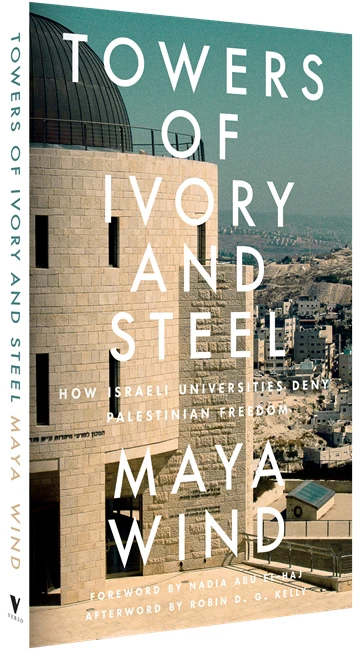
In Towers of Ivory and Steel: How Israeli Universities Deny Palestinian Freedom, Maya Wind establishes an argumentative basis on which one can hold Israeli universities accountable for the ways in which they are participating in the systemic oppression of Palestinians. An anthropologist specialising in the study of settler societies and militarism, Wind is a white, Jewish-Israeli citizen. This particular standing, she suggests, facilitated her exceptional access to Israeli state and military archives and libraries. The book is based on an immense effort of archival research, incorporating sources such as doctoral and master’s theses approved by Israeli universities, official policy documents, state and military memos, government-sponsored research reports, Israeli academic books, and various newspaper articles.
As these sources exist mostly in Hebrew, they are therefore virtually inaccessible to audiences outside of Israel. The book’s purpose thus extends to making these sources available to the international academic community by translating and critically analysing them. Her status additionally provided access to Israeli universities, where she could observe events, conferences, and student life, as well as conduct interviews. These direct observations became integral to her research methodology.
The book is divided into two sections, “Complicity” and “Repression”, each containing three chapters. “Complicity” highlights the convoluted ways in which universities interact with the Israeli state as tools of oppression. Wind argues that all eight major public Israeli universities “constitute central pillars of Israeli settler colonialism” (12). A leitmotif of this first part is the blurring of the lines between academic space and state functions. The first chapter reveals these connections by examining academic disciplines, more specifically archaeology, legal studies, and Middle Eastern studies. In different ways, all three disciplines ultimately work in the service of the government and the security state. Archaeological practice, the book argues, relies in part on illegal excavations conducted in the Occupied Palestinian Territory (OPT). Such activities are condemned by the 1954 Hague Convention for the Protection of Cultural Property in the Event of Armed Conflict and subsequent UNESCO guidelines. These excavations also serve to justify expanded settlement construction, often citing proximity to an archaeological site as a pretext. Beyond archaeology, legal studies provide moral justification for Israeli policies through the construction of interpretations. Wind also points to the Israeli military court system as an “apparatus of control” (41) as it holds a conviction rate of over 99 percent, with over 800,000 Palestinians tried since 1967. Middle East studies departments also maintain ties to the security body. Consequently, they offer “advice on how to ‘manage’ permanent occupation” (47) and provide special training for soldiers. The Havatzalot program at Hebrew University, an elite degree program for the Intelligence Corps, is one example, running since 2018. Hosting the Havatzalot program on campus has broad implications, including military intervention in the university’s content and campus infrastructure, and some argue that these military demands compromise academic freedom. Furthermore, the visible presence of uniformed soldiers on campus creates an environment of fear for Palestinian students.
The interwoven relationship between the university and military colonial function runs deep, as the university grants academic credits for students who volunteer at illegal outposts either as guards or in farming positions.
Shifting focus from disciplines, the second chapter provides a broader view by analysing universities as strategic outposts, arguing that they play an important part in territorial and demographic dominance. As case studies, Wind examines four universities. Firstly, in the case of Hebrew University, strategically placed on Mount Scopus, she focuses on the “Judaization” of East and West Jerusalem and more specifically of the Al-Issawiya neighbourhood. Secondly, she examines the University of Haifa, placed on Mount Carmel, and seen as a key element in the “demographic battle” in Galilee. This is because the university was established in the only region within Israeli borders where Palestinians are a majority. The “Judaization” program was carried out through the mitspim project, research and planning for which is rooted in the University of Haifa. Translated to ‘lookouts’, mitspim were “nuclei of Jewish settlement built on strategically selected hilltops” (74). Afterwards, Wind discusses Ben-Gurion University in the Naqab region, which, she argues, was founded to incentivise settlement in the deserted area. Lastly, Ariel University is seen as a tool for the “Judaization” of the West Bank. The university was placed on seized territory, which is prohibited by international law. The interwoven relationship between the university and military colonial function runs deep, as the university grants academic credits for students who volunteer at illegal outposts either as guards or in farming positions.
Chapter three examines how universities support Israel’s military industries, focusing on three aspects. Firstly, Wind explains hasbara, or state propaganda. Academic institutions build this, for instance, by offering credited courses for students to create public diplomacy content. Thereafter, the chapter analyses security forces training on campus. Programs like Atuda, which covers soldier tuition for extended service, blur military and academic lines. Universities further offer specialised degrees for high-ranking military personnel. Finally, Wind outlines the connection with military corporations and the development and export of war technologies. This university-corporate relationship manifests in scholarship programs, research grants, and a pipeline integrating students into the industry pre-graduation.
The second part of the book, “Repression”, presents the “erosion of fundamental academic freedoms” (119) in Israeli universities. In contrast to the first part, it focuses more on discrimination within universities themselves, and not on the ways that they are related to the Israeli state. This part’s initial chapter outlines the constraints under which academics operate. Analysing what are considered to be acceptable study topics, Wind points to the restricted access to archived and classified data, as less than three percent of files in Israeli government archives are made available to the public. The chapter then examines the impact of groups like Im Tirtzu, an organisation aiming to “reinvigorate the Zionist ideology in Israel” (126). This group contributes to the surveillance of academics, as illustrated by a list they created in 2019 that keeps track of all faculty members who express support for Palestine, thereby limiting free expression. Finally, the chapter details the specific difficulties faced by certain scholars. Palestinian scholars endure racial comments, are frequently criticised for alleged bias against Israel, and are subject to harsher standards measuring their academic credibility than their Israeli counterparts. Arab-Jew scholars, too, are affected by the condemnation of discourse on race and racialisation.
As Robin D.G. Kelley notes in the afterword, this book’s power lies in exposing the role of “liberal silence” (201) in sustaining Israeli apartheid.
Chapter five moves the focus from restrictions imposed on scholars to those imposed on students, and specifically Palestinian students. Such measures start even before students set foot on campus with discriminatory admission exams and other selection practices. By prohibiting certain clothing and offering inadequate prayer spaces, campuses themselves foster a hostile environment, Wind argues. On a more systemic scale, Palestinian students protest permits are frequently denied. Continuing in this vein, the final chapter examines the suppression of Palestinian student mobilisation. Higher education, Wind shows, is maltreated under occupation. Universities are forcibly closed. For instance, Birzeit University, a Palestinian institution, was shut between January 1988 and April 1992. Violence also takes bureaucratic forms, such as visa delays that disrupt Palestinian university programming. Such measures reflect a broader pattern: since 1967, more than 411 Palestinian groups and associations, including all major political parties, have been deemed unlawful.
The book is built on an immense body of research. Not a single argument stands without backing; each is supported by at least one, often multiple, examples. Although the titanic effort behind Wind’s work is evident, this thoroughness presents a double-edged sword. While the enumeration of examples and case studies effectively drives points home, it can also reach a point of circularity in which the argument itself gets lost. Nevertheless, the very possibility of producing such longlists points to the copious evidence of Israeli academia’s complicity. While the book does assume some basic knowledge of the conflict, it excels in avoiding academic jargon, making it accessible to a wider public. A minor issue arises with citations. For instance, the author attributes a prohibition on excavations to the 1907 Hague Convention respecting the Laws and Customs of War on Land, Article 43. This article, contrary to what the text implies, does not specifically mention cultural property or excavations.
Ultimately, universities could, and should, become spaces of free academic exploration and debate for all students.
As Robin D.G. Kelley notes in the afterword, this book’s power lies in exposing the role of “liberal silence” (201) in sustaining Israeli apartheid. This silence can be seen as a result of Israeli scholars presenting themselves as bystanders. Wind describes this idea as a “case on both institutional and individual innocence” (6). However, the book systematically disproves the notion that universities are not accountable for the suppression of Palestinian rights. Furthermore, the argument for individual innocence misrepresents the Palestinian Campaign for the Academic and Cultural Boycott of Israel (PACBI), which advocates boycotting Israeli academic institutions, not individual scholars. Wind draws inspiration for university improvements directly from PACBI’s guidelines. She argues that, read correctly, these instructions provide a clear roadmap forward. Such steps include acknowledging that campuses stand on expropriated Palestinian land, ending research programs that sustain Israel’s violations of international law through their knowledge production, severing laboratory ties with military industries, and halting programs offering academic training to security forces. Ultimately, universities could, and should, become spaces of free academic exploration and debate for all students. Thus, the book echoes PACBI’s call: Israeli universities must be fundamentally reimagined to cease their complicity in the oppression of Palestinians.
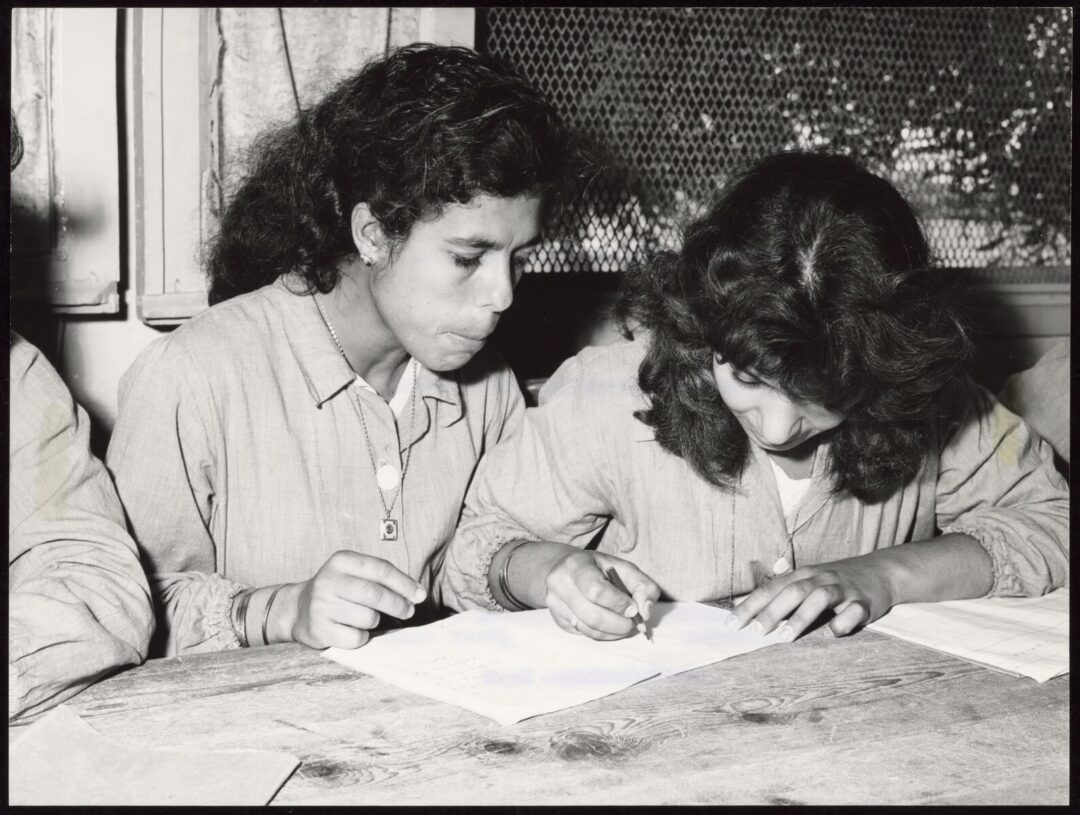
Featured Image: Refugee Education, Gaza – UNESCO. Source: Wikimedia Commons.